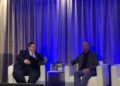
5 questions with … Mitsubishi HC Capital America’s Matt Fitzjerrells
Mitsubishi HC Capital America launches inventory financing program with LS Tractor

Matt Fitzjerrells, senior vice president of inventory finance at Mitsubishi HC Capital America, became the leader of the lender’s North American inventory finance division in October 2025 and already has expanded its operations with a new agriculture OEM partnership.
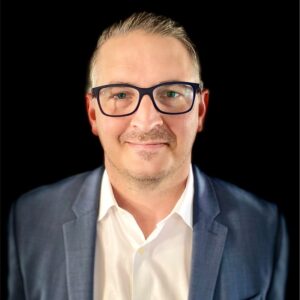
Mitsubishi HC Capital America secured an inventory finance agreement with LS Tractor to support the manufacturer’s dealer network across the United States and Canada, according to a Feb. 25 Mitsubishi HC Capital America release. Under the agreement, Mitsubishi HC Capital America provides floorplan financing to help LS Tractor dealers manage inventory levels.
The partnership expands Mitsubishi HC Capital America’s inventory finance business in the agriculture equipment sector.
Fitzjerrells recently shared with Equipment Finance News details on Mitsubishi HC Capital America’s agriculture inventory finance expansion, how the partnership with LS Tractor came together, the program’s design, its streamlined credit processes and its North American platform.
Equipment Finance News: What made this the right moment to deepen your push into the ag sector — and how did this partnership come together?
Matt Fitzjerrells: The agriculture equipment sector represents a meaningful growth opportunity for our inventory finance business, and we have been intentional about expanding our presence in that space. Demand in compact and utility equipment remain strong, particularly among landscapers, hobby farmers and rural property owners, which aligns well with our appetite and capabilities.
The timing was driven by both market opportunity and alignment. LS Tractor is a fast-growing, customer-focused organization with ambitious expansion plans across North America. We connected through conversations around how to best support their dealers with a more flexible, responsive financing program.
It quickly became clear that our strengths in tailored program design, speed of execution and access to capital were a strong fit for their strategic priorities. From there, we worked collaboratively to structure a program built specifically around the needs of their network.
EFN: What complexities arise in cross-border inventory finance, and how does Mitsubishi HC Capital America navigate those while keeping credit decisions streamlined?
MF: Cross-border inventory finance introduces additional considerations, including regulatory differences, documentation requirements, currency dynamics and varying commercial practices between the U.S. and Canada. Dealer profiles and regional market conditions can also differ, which requires thoughtful underwriting and program design.
We navigate those complexities by leveraging our established North American platform and experienced credit teams in both markets. While we account for local requirements and risk factors, we maintain consistent credit standards and centralized program oversight.
That balance allows us to deliver streamlined credit reviews and timely decisions, while still respecting the nuances of each country. For dealers, the experience feels cohesive and efficient, even though there is significant coordination behind the scenes.
EFN: What are the factors that you consider when developing an inventory financing strategy for clients?
MF: Every inventory finance strategy starts with a deep understanding of the manufacturer’s distribution model, growth objectives and dealer network profile. We look at seasonality, product mix, average turn rates, dealer financial strength and the competitive landscape.
From there, we design floorplan structures, advance rates and terms that align with how the business actually operates. Macroeconomic conditions are always a factor. Interest rate trends, access to capital, supply chain stability and overall demand in the sector influence how conservative or aggressive a program should be.
That said, we focus on building programs that are durable across cycles. The goal is to create a structure that supports growth in strong markets while also helping dealers manage risk during periods of volatility.
EFN: How does supporting a growth-oriented brand like LS Tractor differ from financing more mature OEM networks?
MF: With a growth-oriented brand, there is often a greater emphasis on scalability and speed. Dealer networks may be expanding into new territories, onboarding new partners or increasing inventory to capture rising demand. Financing programs need to be flexible enough to support that expansion without creating unnecessary friction.
In contrast, more mature OEM networks may prioritize optimization and efficiency within an established footprint. The focus can shift toward fine-tuning terms, managing long-standing dealer relationships and driving incremental improvements.
In LS Tractor’s case, our role is to provide a program that supports expansion while maintaining disciplined credit oversight. That means quick decisions, customized structures and ongoing dialogue to ensure the financing evolves alongside their growth strategy.
EFN: How are manufacturers and dealers using inventory finance proactively to capture demand and manage risk?
MF: Manufacturers and dealers are increasingly viewing inventory finance as a strategic tool rather than simply a funding mechanism. On the demand side, flexible floorplan programs allow dealers to stock the right mix of equipment, respond quickly to seasonal spikes and avoid missed sales opportunities.
At the same time, thoughtful program design helps manage risk. Dealers can better align inventory levels with realistic sales forecasts, while manufacturers gain improved visibility into channel health.
Features such as structured terms, disciplined credit reviews and clear reporting provide guardrails that support sustainable growth. In a market that can shift quickly, having a finance partner that delivers speed, transparency and long-term collaboration gives both manufacturers and dealers greater confidence to pursue growth while maintaining balance sheet discipline.
The fourth annual Equipment Finance Connect at the C. Baldwin in Houston May 18-19 is the only event that brings together the equipment industry to share insights, attend discussions on crucial industry topics and network with peers. Learn more about the event and register here.


Proud Member Of

Check Out Our Industry Event