How to Make Any Diesel Freight Truck Electric? Use This Plug-In Device
In total, Revoy has raised $41 million

Trucking is big business in the US, but it relies on pricey fuel that produces a lot of planet-warming emissions. Electric trucks are an obvious answer, however their sticker price is two or more times as expensive as traditional freight trucks. Even if the cost were to fall, it would take time to replace existing rigs.
Robotics startup Revoy thinks it has a solution to allow any truck to go electric for part of its journey. The San Francisco-based company has built a detachable unit with an electric motor and batteries that sits between the truck’s tractor and trailer. It has just raised $27 million in a Series A round to scale up its operations.
On a full charge, Revoy’s electric dolly can lug an 80,000-pound truck for more than 200 miles. The company’s dream is to eventually build out a network of hubs along roadways, where truckers could swap in a fresh device. Revoy estimates that the unit can reduce carbon emissions by as much as 85%.

“Our technology allows you to compete with diesel at cost, which is not true yet for other electric trucks in the US,” said Peter Reinhardt, chief executive officer of Revoy.
The cost to operate Revoy’s system would be equivalent to powering a truck with diesel, based on prices before the US war with Iran, according to Reinhardt, who is also CEO of carbon-removal company Charm Industrial Inc. The average retail price of diesel in the US remains about 40% above the pre-war level of about $3.80 per gallon.

Revoy would extend the life of existing diesel freight trucks, a different proposition than the fully electric heavy-duty trucks on sale from manufacturers including Tesla Inc. and Volvo AB. Sales of those vehicles in the US in the first half of this year were lower than the same period last year despite higher diesel prices, according to BloombergNEF. Sales may increase in the second half with Tesla reporting a pipeline of 1,200 orders in May, the researcher said in a June report, citing data from a California voucher program.
The new entrants are going after a freight truck market with revenue of about $900 billion in 2024, according to the American Trucking Association. The 3 million registered heavy-duty trucks in the US together drive about 60,000 miles a year, generating roughly 300 million tons of carbon dioxide, or about 6% of US annual emissions, according to data compiled by Bloomberg. Fuel makes up more than one-fifth of owners’ operating costs.
Revoy’s idea is a good starting point to address the rising cost of trucking and make it cleaner, said Nikolas Soulopoulos, head of commercial transport at BloombergNEF. “Slotting into the existing fleet is a big advantage,” Soulopoulos said, adding a caveat: Scaling up manufacturing of these electric dollies in the US won’t be easy, in part due to battery supply constraints. The choice of manufacturing outside the US is limited because of the high tariffs that the current government has deployed.
Revoy was founded in 2020 and received regulatory approval from the National Highway Traffic Safety Administration in 2023. The following year, it ran a successful yearlong technical pilot with freight company Ryder System Inc.
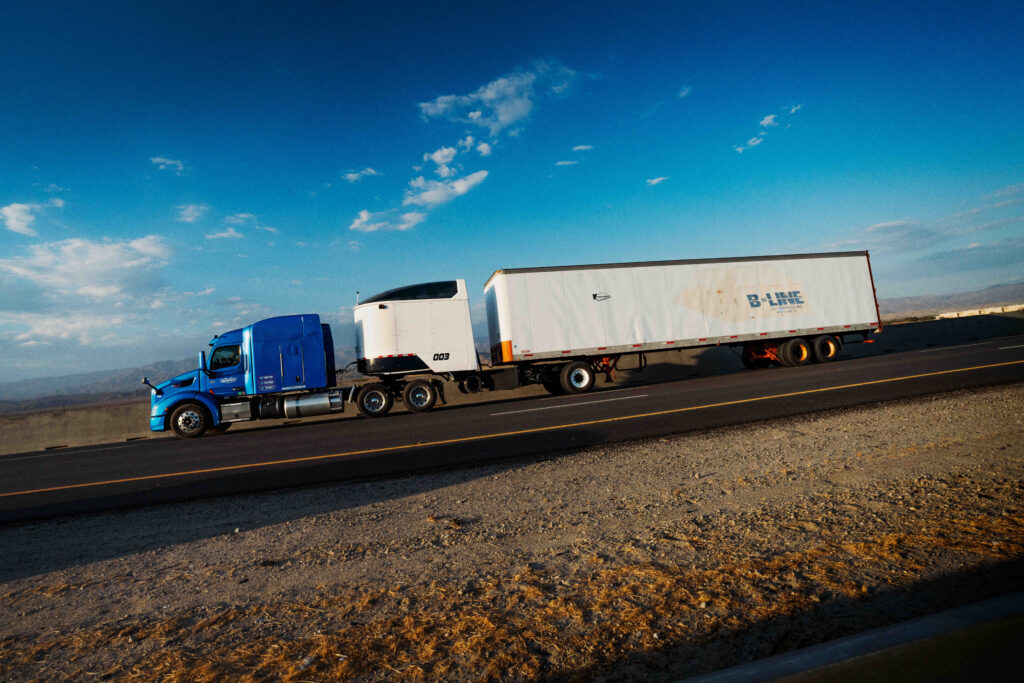
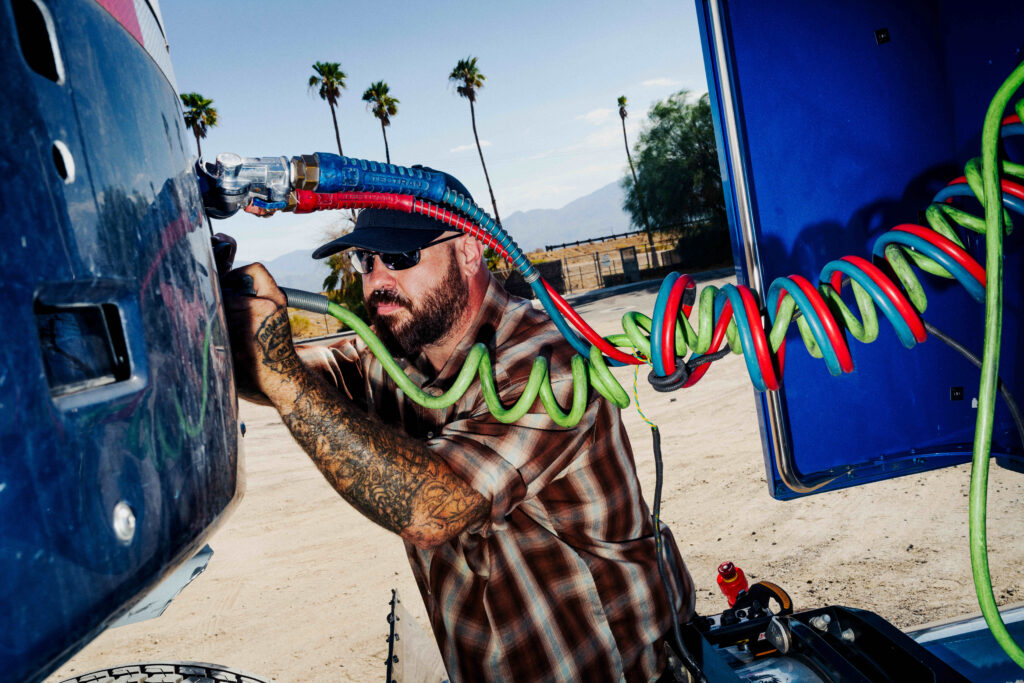
For its first commercial operation, the startup’s partners have bought second-hand diesel trucks and Revoy is training their drivers to use the electric dollies. Revoy will start using four electric dollies, which the company assembled using Chinese components, on a 200-mile stretch near Portland, Oregon, later this year.
With the new funding, Revoy is planning to assemble a less expensive second-generation electric dolly with a smaller battery offering the same range. The company hopes to have dozens of dollies in operation by the end of next year. In total, Revoy has raised $41 million. The latest funding round was led by Standard Capital, with additional investors including Doerr Capital, Time Ventures, Y Combinator and Leap Ventures.
Revoy’s technology is an application of robotics, said Ian Rust, chief technology officer and founder, who previously worked at the self-driving startup Cruise, which was acquired by General Motors Co. “Instead of removing the driver, we’re using robotics to switch the fuel source,” he said.

Rust took inspiration from the field of collaborative robotics, which has, among other inventions, given birth to robotic exoskeletons that can help humans lift several times the weight their biological muscles alone would allow.
The electric dolly follows the same principle. When the driver hits the accelerator pedal, the diesel engine revs up and causes the truck to lurch forward. At that instant, the dolly gets the signal to power up batteries and an electric motor, which then causes the diesel engine to stop firing as hard. Similarly, when the driver applies the brake, the electric dolly starts using the reversing of the electric motor to charge the battery.
Revoy is currently focused on the US, but Rust hopes the technology could eventually be applied globally.



Proud Member Of

Check Out Our Industry Event