26 freight companies filed for bankruptcy in Q2
Equify, Arvest Bank, Ameris Bank among affected creditors


Although dozens of freight carriers filed for bankruptcy in the second quarter as transportation lending remained tight, carrier exits bode well for the industry’s overall recovery, experts say.
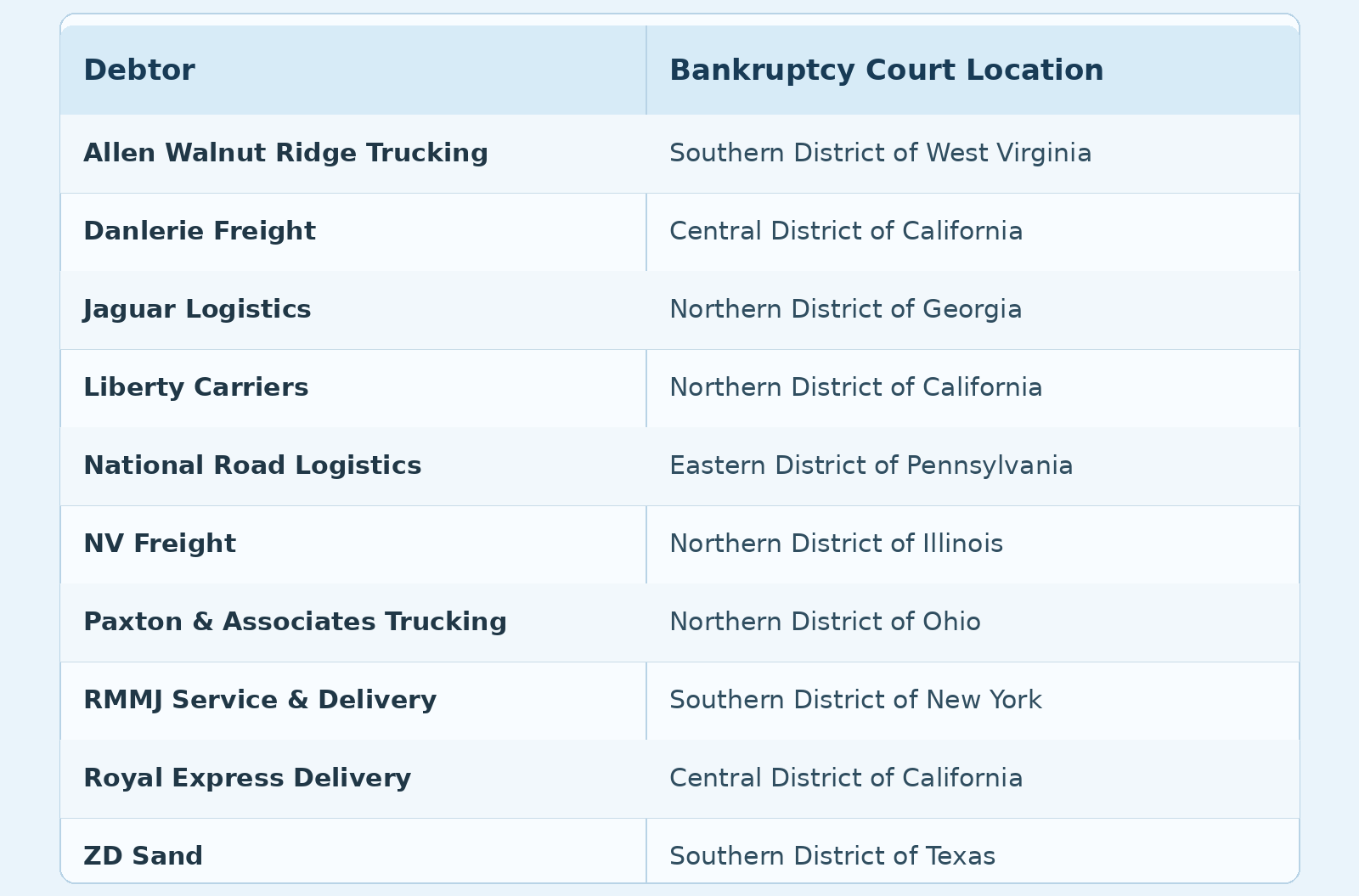
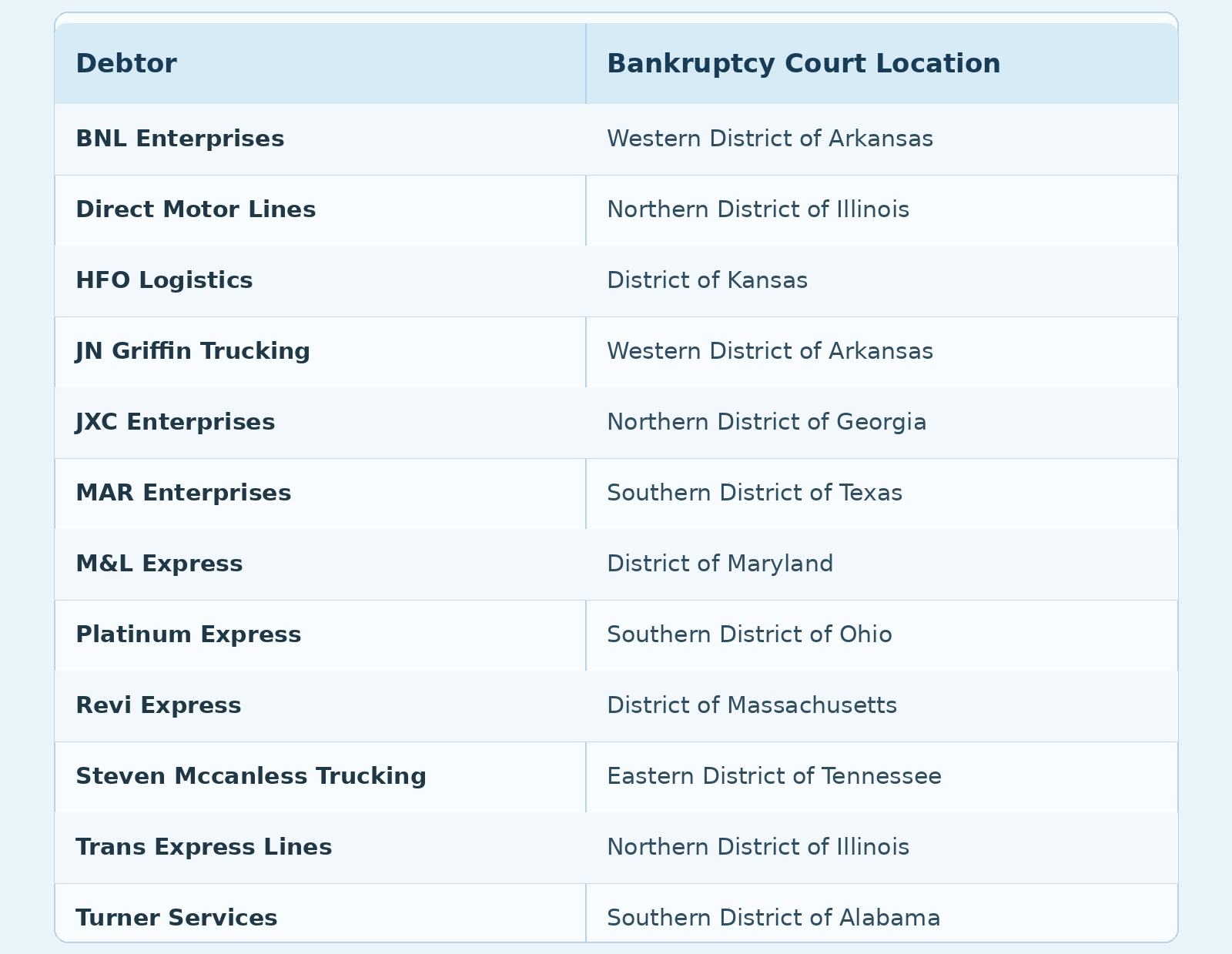
The following 26 freight companies filed for Chapter 11 bankruptcy in Q2, according to U.S. Bankruptcy Court documents obtained by Equipment Finance News.
April
May
June
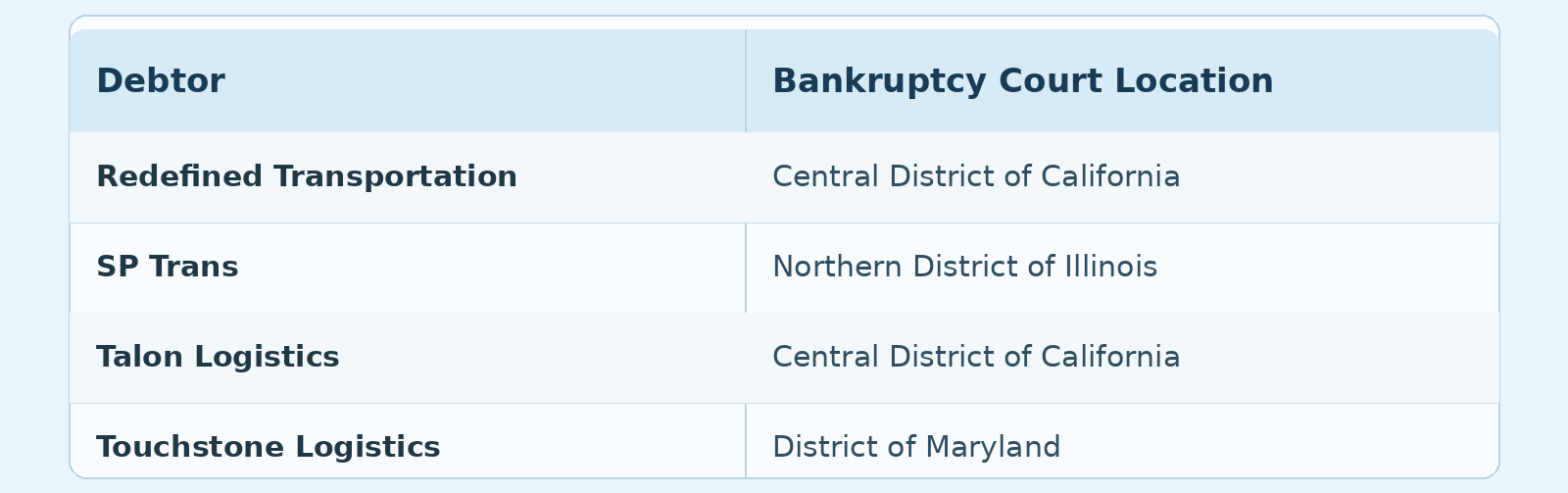
The 12 filings in May are tied for the second-highest monthly total since EFN began tracking freight bankruptcies in April 2025. The most, tallied in January, is 20.
The 26 filings in Q2 are down from 38 in Q1 — the highest quarterly count since EFN’s tracking began — but up from 20 in Q2 2025.
Headache for lenders
Numerous banks, independent lenders and OEM captives were affected by the Q2 bankruptcy filings.
For example, Equify Financial filed an objection to ZD Sand’s reorganization plan on Sept. 1, claiming that the plan did not account for a nearly $1.3 million truck loan that it provided on April 15, shortly after ZD Sand filed Chapter 11.
Equify said the debtor agreed to pay $21,345 per month for 60 months starting June 20, that ZD’s restructuring plan omitted its secured interest, perfected on Aug. 16, and that the ZD Sand has failed to make payments as agreed upon.
A trustee appointed to the case on July 13 has not authorized Equify’s post-petition financing motion, according to the Sept. 1 filing.
Equify requested its post-petition financing motion to be resolved before any other hearings take place, whether they’re related to ZD’s restructuring plan or competing objections filed by other creditors.
The NV Freight filing on April 8 also affected Equify as well as Arvest Bank and Ameris Bank, claiming roughly $443,000, $352,000 and $307,000 in partially secured collateral, respectively, according to NV’s July 7 reorganization plan.
Additionally, Direct Motor Lines’ May 19 filing shows that TAB Bank has a $1.1 million claim tied to 17 trucks.
Waning overcapacity
While bankruptcies and creditor disputes highlight distress in the transportation sector, they support the industry’s recovery from a yearslong recession as carrier exits alleviate overcapacity issues.
Reflecting this, lenders are repossessing considerably fewer trucks compared with last year, Chris Grivas, president of Chadds Ford, Pa.-based CAG Truck Capital, told EFN.
“It wasn’t raining trucks for repossessions; it was literally a hurricane of trucks. It’s trickled down significantly to where there’s a raindrop here and there.”
— Chris Grivas, president, CAG Truck Capital
Also, many inexperienced operators entered the industry during the pandemic truck boom and “just didn’t know how to bob and weave and survive,” leading to distress and tightened lending standards, Grivas said.
“Now they’re gone,” he added.
“I don’t know if we’re completely out of the woods, but it’s a hell of a lot better than it was,” he said.
Check out our exclusive industry data here.



Proud Member Of

Check Out Our Industry Event