5 questions with … CAG Truck Capital President Chris Grivas
Operating costs for trucking rose 37.3% over past four years

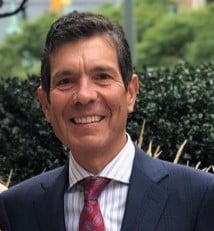
As the trucking industry’s “little guys” get squeezed by rising operating costs and low freight rates, CAG Truck Capital President Chris Grivas still prioritizes the needs of owner-operators.
Chadds Ford, Pa.-based CAG Truck Capital has emphasized serving owner-operators while filling a void in the engine overhaul financing market since its founding in 1984. CAG’s engine overhaul services have been recommended by engine manufacturer Cummins as well as dealers representing Paccar, Volvo, Mack and Caterpillar.
CAG remains committed to its niche at a time when owner-operators especially feel the strain of tightened credit conditions, rising insurance costs and high interest rates. The average operating cost for trucking companies has increased 37.3% over the past four years, according to the American Transportation Research Institute.
The truck finance company also finds itself at the crossroads of an evolving used-truck market, with more buyers targeting high-mileage trucks while operators hold onto their assets for longer durations.
Grivas recently shared his approach to truck financing, risk management and supporting owner-operators with Equipment Finance News. What follows is an edited version of the conversation.
Equipment Finance News: What have been the keys to sustained success in the engine overhaul financing market?
Chris Grivas: The key is to be an expert at it and be able to convey that to the dealer, which is very, very important.
When a client calls us saying they need an overhaul, it’s not about how much money they need. It’s about asking the right questions — Are you including the injectors? Are you including the turbo? Did the service people talk to you about the level of warranty? Did you check your emission systems? Because your emission systems could hurt your new engine, and if you don’t do that, you could end up voiding the warranty that you’re just about to spend $30,000 to $50,000 for.
There’s just so much, and if you’re able to convey that to the dealer, you’re going to be No. 1.
EFN: What factors come into play when advising borrowers seeking an engine overhaul or a used truck?
CG: Where we come in as advisers is the structure of the loan. Most customers want the lowest monthly payment. I get that, but sometimes that’s not the best.
Let’s say you’re buying a used truck, does it really make sense for us to put you in a position where two or three years from now, you owe more than what a truck is worth? At that point, you have negative equity.
We’re never going to put someone in that position, and being an adviser means explaining that to them in a manner that’s understandable, but also factual.
EFN: What are the keys to managing risk when financing high-mileage used trucks, especially now that more buyers are targeting them?
CG: For pre-emission trucks (built before 2008), what we look for is how much was invested in the truck to keep it alive. Some older trucks have been well maintained, and people put good money into them.
When you get into the emissions trucks, CAG focuses on trucks that will retain their value and are worth investing in an engine overhaul. Examples would be long-hood semis like Peterbilt 389s and Kenworth W900s as well as heavy-spec vocational trucks such as tri-axle dump trucks, roll-off trucks and heavy-spec day cabs.
In fact, CAG will finance those vehicles with higher mileage, giving the customer the assurance of overhaul financing should the truck need it during the loan.
EFN: How have you centered your business model around the needs and challenges specific to owner-operators?
CG: We try to understand each borrower’s unique situation and what they’re getting into with each purchase. Sometimes, that means advising them on long-term growth plans.
For example, you may want to buy your second truck after you’ve paid off your first truck. That’s great, but when you’re ready to go from an owner-operator to becoming an entrepreneur, that’s one of the most dangerous times.
You probably want to stop and ask yourself some questions. Who’s your driver? Ask yourself why he’s coming to work for you and not one of those companies that has 2,000 trucks, that offers a 401(k), health insurance and a host of other benefits?
We advise the owner-operator to really know their driver and establish trust. Do a background check, make sure they’re going to take care of your equipment.
EFN: What measures can owner-operators with credit blemishes or minimal time in business take to give lenders the confidence to work with them?
CG: If you have past credit and there are issues, have an explanation and have some kind of demonstration that you have reestablished some credit.
The biggest thing is, where’s your commitment? I recommend showing up with a serious down payment and showing that you have the roots and resourcefulness. If you don’t have the roots and resourcefulness, we’re not doing you a favor by helping you go into business.
We don’t want to be in the business of repossessing trucks. We want to be in the business of helping you succeed.
Check out our exclusive industry data here.



Proud Member Of

Check Out Our Industry Event