Inventory financing shifts to ‘just in time’ as dealer demands change
Revolving credit line segment could grow 53% over next 8 years in inventory finance

The inventory finance market is reaching an inflection point as more dealers require flexible solutions that align with short-term needs and fleet optimization but don’t strain their debt capacity.
Across equipment, auto and powersports dealerships, traditional floorplan lending accounted for the largest share of the inventory financing market in 2025 at 38.2%, according to research and consulting firm Market Intelo. Working capital loans and revolving credit lines followed at 24.5% and 21.8%, respectively.
However, Market Intelo projects working capital and revolving credit segments to grow 58.7% and 53% over the next eight years, respectively, compared with 41.9% for the floorplan sector.
As dealer finance operations evolve, lenders are working to “keep up with everything that’s changing as quickly as the dealers are,” Heidi Brooks, U.S. sales manager for commercial finance at DLL, said during a panel discussion at the recent Equipment Finance Connect in Houston.
Evolving market
Over the past year, equipment dealers’ inventory finance needs have been influenced by normalizing supply chains post-pandemic and macroeconomic changes, Marc-Andre Carrier, director of dealer credit at OEM captive Volvo Financial Services, told Equipment Finance News.
“As production constraints eased and equipment availability improved, inventory levels increased across many dealer networks,” he said. “At the same time, higher interest rates increased the carrying cost of inventory, resulting in greater floorplan utilization and financing expense.”
Dealers now are working to navigate anticipated customer demands, product availability and market uncertainty as inventory levels stabilize, Carrier said.
“As a result, financing needs have remained elevated, although dealers continue to actively manage inventory turns and ordering patterns to align with current market conditions,” he said.
Tariffs on new equipment also have affected dealer finance operations, Skip Owen, director of sales at Columbia, S.C.-based Hills Machinery, said at the Equipment Finance Connect event.
“If there is tariff-penalized inventory, it’s dangerous sitting in the yard too long,” he said. “The milk could be going stale.”
Various “market pressures and shifts” in recent years have forced lenders to look more closely at the credit capacity that dealers can afford, DLL’s Brooks said.
“Just because you want $25 million in inventory doesn’t mean that you can afford $25 million in inventory. ‘Can we afford the interest rate? Can we afford the principal payments? Is there enough revenue generation coming through for these dealers from a rental fleet perspective?’ There’re so many other things going on that are shifting how we look at things.”
— Heidi Brooks, U.S. sales manager for commercial finance, DLL
Just in time
Lenders are responding to market shifts by providing inventory finance solutions tailored to short-term needs, with more dealers ordering fewer machines to meet customer demands rather than loading up on months of inventory, Brooks said.
“Now, it’s become more just-in-time,” she said. “If a customer wants something, the lead time from the OEM isn’t as long as what it used to be, so we’re seeing inventory levels start to re-level out.”
To that end, Volvo Financial Services works closely with dealer finance departments to understand business needs and “offer flexibility and capacity to support their needs through any business cycle,” Carrier said.
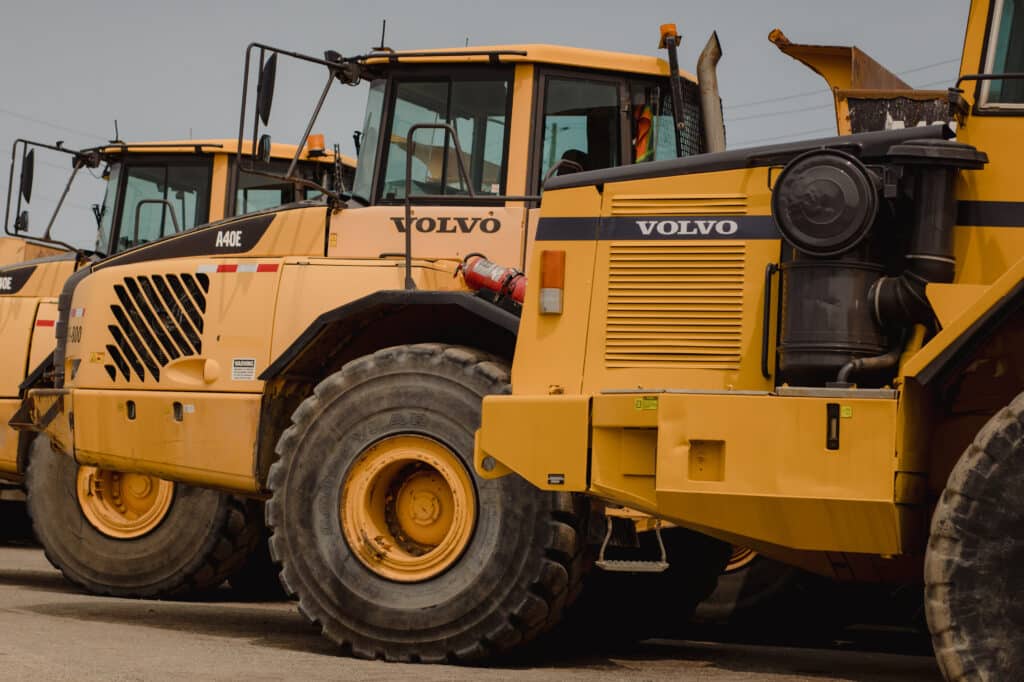
The captive structures credit facilities with renewal periods that “provide dealers with planning certainty around their available capacity while also aligning with our own credit approval process,” he said.
“Dealers have flexibility under the terms of these credit lines to order and fund units based on their operational needs.”
Working capital also allows dealers to quickly respond to demand spikes, Jeremy Jansen, global head of originations for Wells Fargo Supply Chain Finance, told EFN.
For example, when a dealer sees a surge in demand from a hyperscaler needing to purchase data center hardware, working capital “can help them fast-forward those receivables that are due from a hyperscaler once they’ve made that sale,” Jansen said.
“There are other supply chain finance products that can help them provide certain value toward the inventory that they need,” he said.
Balancing new, used
As rising new equipment prices and tariffs cut into margins, dealers are increasingly seeking financing for used inventory, especially through trade-ins, DLL’s Brooks said.
This is an area “where the OEMs really need to be stepping up to help these dealers finance these trade-ins and used equipment, but maybe subsidize it for a period,” she said.
Hills Machinery’s Owen agrees and said that used equipment is “critical for us to get a margin blend,” he said.
“Typically, we can make a little bit more on our used equipment, and we are really emphasizing our rental fleet and building that to get assets productive. We’re creating revenue on those assets and then hopefully selling them downstream at a better margin.”
— Skip Owen, director of sales, Hills Machinery
This financing need comes at an opportune time, with used medium- and heavy-duty construction inventories falling 15.3% year over year and 10.2% YoY in June, respectively, according to Sandhills Global.

Used medium-duty truck inventory declined 37.6% YoY in June, while heavy-duty truck inventory dropped 31.6% YoY.
Telematics
As market uncertainty yields some caution among inventory financiers, turn ratio — a metric that shows how many times a dealer sells and replaces inventory over a given period — is “more important than ever” to secure favorable deals, Owen said.
In essence, a flexible offering is often tied to “what’s moving,” D.J. Jackson, senior director of business development at Oakmont Capital Services, said at Equipment Finance Connect, noting that technologies such as telematics enable deeper insights into such performance metrics.
“The sophistication that I’m seeing from the dealers now of knowing what moves at what time of year has really, really come around in a wonderful way.”
— D.J. Jackson, senior director of business development, Oakmont Capital Services
Telematics presents a significant opportunity to “help from an inventory inspection perspective,” DLL’s Brooks said.
“As a lender, I can go into a system and I can see that an asset is located exactly where it should be, then I don’t have to pay an inspector to go out and look at it,” she said.
“I also think it will be beneficial for the dealer because our inventory inspections are time consuming … so it’d be really nice to have that implemented in all the assets.”
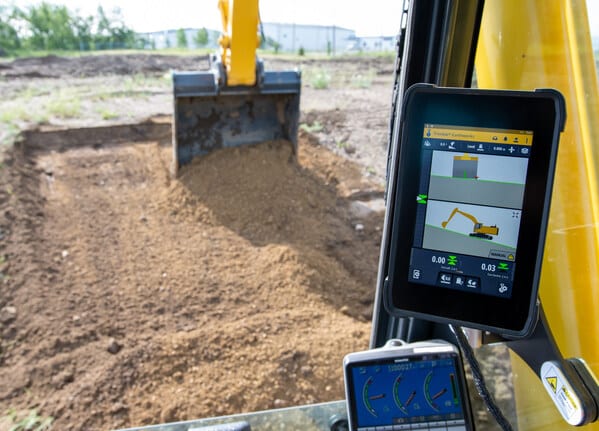
Telematics also helps establish and maintain trust with inventory lenders, Owen said.
“It gives trust by verifying wholesale audits, keeping us behaving responsibly with demos or things that slip into the rental fleet,” he said. “I think it helps that relationship overall.”
Further highlighting the emergence of tech, equipment lender Elevex Capital and lending solutions provider Vero Technologies launched an inventory finance platform today, with features including real-time monitoring, digital audits and self-service dealer portals, according to an Elevex release today.
“When we can see a dealer’s floor in real time, we can fund faster, audit with far less friction, and give dealers the flexibility their business actually needs,” Elevex President and Chief Operating Officer Spencer Richman stated in the release.
Overall, AI and evolving technology are enhancing captives’ ability to support dealers “by strengthening existing capabilities, including real-time portfolio management, predictive financial analysis, better risk controls and more tailored credit solutions,” Volvo’s Carrier said.
Check out our exclusive industry data here.



Proud Member Of

Check Out Our Industry Event