Equipment dealers expand leasing, rental revenue as financing demand grows
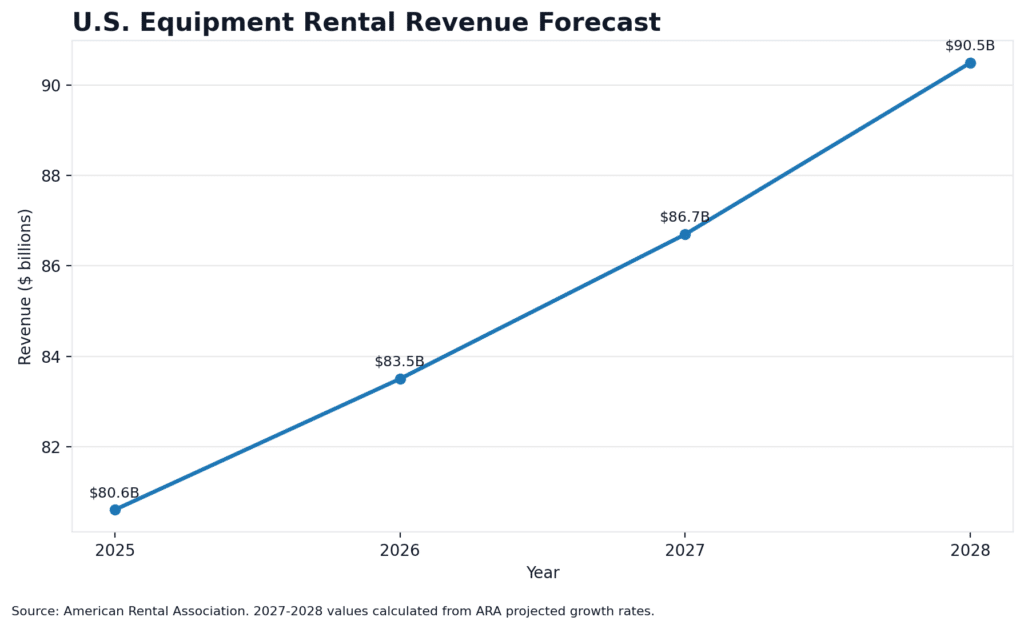
Equipment rental market forecast to reach $90.5 billion by 2028

Equipment dealers are leaning into leasing, rental and bundled service revenue as customers demand more holistic solutions from both dealers and lenders in an effort to preserve liquidity amid sustained economic uncertainty.
Dealers are increasingly selling productivity, uptime and lifecycle support alongside equipment as buyers weigh higher costs, labor constraints and uncertain demand, Anthony Sasso, senior vice president and head of equipment finance at TD Bank, told Equipment Finance News.
“Preservation of capital is the No. 1 benefit of equipment finance,” he said. “Clients want to hang on to that cash.”
That shift is changing how dealers, lenders and customers discuss equipment purchases. Rather than focusing on the price of machinery or the rate on a loan, customers are asking how equipment financing can preserve capital, support operations and keep assets producing revenue, Sasso said.
“There’s more of an appetite to have a conversation today than I’ve ever seen before,” he said. “There’s more of a receptivity … for us to have a conversation about equipment financing and allowing us to describe products that can meet specific needs.”
Equipment financing shifts toward productivity
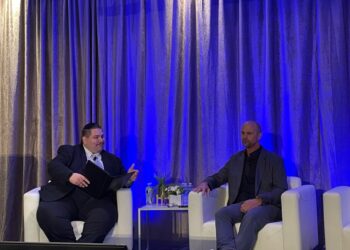
Financing conversations are moving beyond acquisition costs and toward how machinery supports a customer’s broader business strategy, with leasing evolving from a primarily accounting-driven tool into a broader lifecycle asset management strategy, Andy Suhy, chief executive of Premier Equipment Solutions, said during a fireside chat at last month’s Equipment Finance Connect.
“The old days, it was really more of a financing play, balance sheet financing,” he said. “In today’s environment, if you’re not using equipment leasing as a mechanism to solve problems for your customers and keep them operating equipment within the economic lifecycle of the asset, then you might be missing out on the opportunity.”
For dealers, that changes the sales process from “selling iron” to selling solutions, which also requires sales training, Suhy said.
“The reality is we’re training them to sell revenue production and uptime for our customers,” he said. “That’s changing the conversation away from, ‘You’re going to buy a $100,000 mini excavator and your interest rate is 7%,’ versus, ‘Let me understand your business.’”
When dealers better understand a customer’s business, the conversation, Suhy said.
“You’re not necessarily talking about price or interest rate anymore,” he said. “You’re talking about a lease payment and it’s a completely different conversation than we were having 20 years ago.”
Labor shortages also are driving demand for equipment that can improve productivity, DJ Jackson, senior director of business development at Oakmont Capital Services, said during a panel discussion at Equipment Finance Connect.
“If they can’t find the workforce or they can’t put all those added costs onto the job, they’ve got to figure out how to do it more efficiently and that comes with equipment,” he said.
Service operations drive dealer revenue
Service departments are becoming a larger part of dealer profitability as customers seek support throughout the equipment lifecycle. That also shapes the sales process, Suhy said.
“We don’t lead with the sale price,” he said. “We find out what problems we need to solve, what the customer needs, what the solution should look like, how many machines they have, what their products are.”
Premier then presents customers with a bundled solution and a payment, Suhy said.
“I’m not saying we don’t give them the sale price,” he said. “Eventually, they raise it, but it probably won’t be till the second or third ask.”
Through the bundled solutions and the adoption of telematics — rather than expecting customers to analyze equipment data themselves — Premier uses fault codes and usage information to support bundled leases, Suhy said.
“So now they’re on a bundled lease, they’ve got guaranteed uptime, guaranteed revenue production and, oh, by the way, we’re getting telemetry off your machine,” he said.
Equipment leasing, rental deepen customer ties
Leasing and rental programs are helping dealers build deeper customer relationships by keeping them engaged throughout the life of an asset.
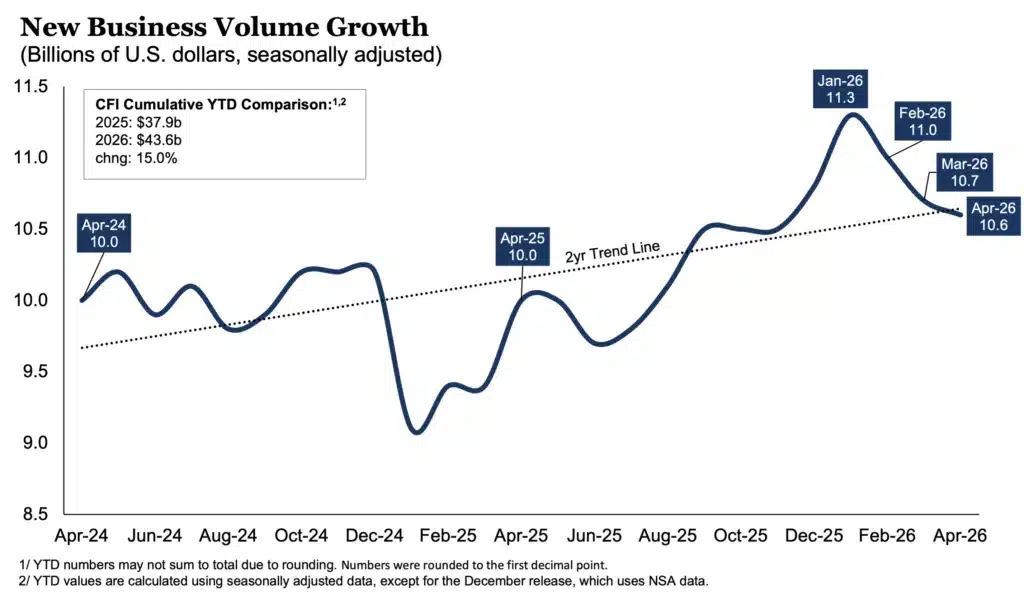
Equipment finance demand remains strong, with new business volume reaching a record $11.6 billion in January, up 30.1% year over year and the highest monthly level in the 20-year history of the Equipment Leasing and Finance Association (ELFA)’s CapEx Finance Index.
That overall growth has continued this year, with year-to-date new business volume up 15% YoY to $43.6 billion, a pace that would be the best year in the history of the index, according to a May 26 ELFA release.
Meanwhile, the American Rental Association (ARA) projects U.S. construction and industrial equipment and general tool rental revenue will reach $83.5 billion in 2026, up 3.6% from 2025, according to a May 8 ARA release.
ARA expects revenue to continue rising in 2027 and 2028 by 3.8% and 4.4%, respectively.
This comes amid “a major shift in the appetite of clients” who historically used cash or lines of credit. Now they are more willing to consider equipment financing, TD Bank’s Sasso said, because they want to preserve liquidity.
“Clients want to hear about solutions and what we can do from an equipment-financing perspective, whether it be traditional financing or tax-exempt financing, depending upon the state they’re in,” Sasso said.
Dealers become lifecycle partners
The shift toward leasing, rental and service revenue reflects a broader change in how customers think about equipment ownership while they seek to grow their businesses, reduce risk and avoid equipment that becomes too costly to operate, Premier Equipment’s Suhy said.
That approach can lengthen the sales cycle, but it creates stronger relationships, Suhy added.
“I know that everyone wants good deals done fast,” he said. “But I’d rather take a little bit longer time to get a better deal that’s going to provide a longer-term, stickier relationship than just be a transactional vendor and flip a piece of machine to somebody.”
As a result, the industry is moving away from viewing lending as “money over money” and toward seeing equipment leasing as part of the full asset lifecycle, Suhy said.
“Equipment leasing is really that wrapper that sort of holds that entire asset lifecycle together,” he said. “It allows them to get in and out of equipment during its lifecycle and focus on growing their business.”
Check out our exclusive industry data here.


Proud Member Of

Check Out Our Industry Event