5 questions with Mitsubishi HC Capital America’s Lawrence Kunkel
Lender combines real-time processing with flexible terms for CMC dealers

Rental is expected to account for a larger share of equipment dealers’ business as cautious end users increasingly match equipment acquisition with individual construction projects, Lawrence Kunkel, vice president of inventory finance at Mitsubishi HC Capital America, told Equipment Finance News.
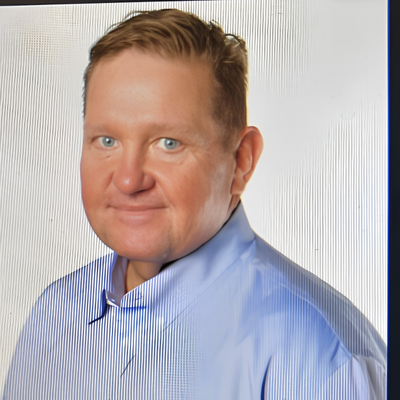
Higher interest costs also have sharpened dealers’ focus on inventory turns, ordering frequency and carrying costs, Kunkel said. In his 25 to 30 years in equipment finance, he has never seen dealer ownership and finance teams more focused on aligning inventory with sales cycles, he said.
Mitsubishi HC Capital America on July 6 became a preferred lender for CMC North America, an aerial-platform sales, distribution and service provider. The program provides inventory, retail and rental financing to CMC dealers across the United States and Canada.
Kunkel recently shared how Mitsubishi HC Capital America is using technology, flexible financing structures and equipment expertise to support the program. What follows is an edited version of his written responses.
Equipment Finance News: The companies said the program will provide more consistent terms and faster access to capital. What changes will make that possible?
Lawrence Kunkel: Mitsubishi HC Capital America combines centralized underwriting, dedicated program management, electronic invoice processing, automated workflows and its dealer portal. Most inventory requests can be processed in real time, while electronic data interchange capabilities accelerate invoice purchasing and funding. These investments help reduce manual steps, improve consistency and shorten funding timelines.
EFN: How are interest rates, equipment costs and broader economic uncertainty affecting demand for tracked aerial lifts and dealers’ inventory financing needs?
LK: Dealers remain focused on balancing inventory availability with capital efficiency. In today’s market, financing flexibility is increasingly important. Programs that provide 100% financing on eligible equipment, flexible repayment structures and inventory management tools help dealers maintain adequate stock levels while managing cash flow and market uncertainty.
EFN: What trends are you seeing in demand for retail financing compared with rental fleet financing?
LK: We continue to see healthy demand for both ownership and rental-based acquisition strategies. Customers have different capital allocation preferences, and our platform is designed to support either approach through equipment loans, leases and rental fleet financing solutions. Offering multiple financing structures allows dealers to respond to changing market conditions and customer preferences.
EFN: How does Mitsubishi HC Capital America evaluate collateral values and residual-value risk for specialized aerial equipment?
LK: Our credit approach combines customer credit analysis with equipment expertise. We evaluate both the borrower and the underlying asset.
In addition, our asset trading and services group supports appraisals, remarketing, trade-in management and asset disposition, providing market intelligence for collateral valuation and life cycle management.
EFN: Are dealers more cautious about inventory levels or holding equipment longer, and how can financiers help them manage those pressures?
LK: Dealers are always looking to optimize inventory turns and preserve liquidity. Financing providers can help by offering flexible curtailment schedules, pay-as-sold structures, early-pay incentives and online inventory management tools that provide greater visibility and control over floorplan portfolios.
Check out our exclusive industry data here.




Proud Member Of

Check Out Our Industry Event