Equipment Finance News

No products in the cart.

SUBSCRIBE
  • News
  • Event
  • Data
  • Features
  • Lender Directory
  • PodcastNew
  • WebinarsNew
    • Webinar Library
  • Login
Log In
No Result
View All Result
  • Dealers
  • Lenders
  • Transportation
  • Agriculture
  • Construction
  • Materials Handling
  • Rentals
  • Compliance
  • Bankruptcy
  • Data Analysis
Equipment Finance News
  • News
  • Event
  • Data
  • Features
  • Lender Directory
  • PodcastNew
  • WebinarsNew
    • Webinar Library
No Result
View All Result
Equipment Finance News
No Result
View All Result

Kodiak AI, Paccar weigh in on liability, insurance questions looming over autonomous trucking

Autonomous truck insurance market could reach $14B by 2033

Quinn DonoghuebyQuinn Donoghue
November 19, 2025
in Transportation
Reading Time: 3 mins read
0
Share on FacebookShare on LinkedIn

Liability and insurance questions are casting an air of uncertainty over autonomous trucking despite strong market momentum.  

The autonomous truck insurance market is projected to hit $13.8 billion by 2033, a more than fivefold increase from $2.7 billion in 2024, driven by growing demand for tailored insurance solutions that address the unique risks associated with autonomous technologies, according to research and consulting firm DataIntelo. 

In fact, autonomous trucking company Bot Auto recently secured a “comprehensive insurance program” placed by insurance broker Marsh, providing auto liability, property, general liability, cargo and inland marine protection, along with a cybersecurity policy, according to a Nov. 12 Bot Auto release. 

The financing landscape is also coming into focus for autonomous trucks, with lenders beginning to explore: 

  • Asset-backed loans,  
  • Usage-based financing; and  
  • Full-service leasing structures.  

Who’s liable?  

Despite steady strides toward widespread deployment, liability questions persist, Ann Rundle, a research analyst at ACT Research, said during a Nov. 18 webinar about the future of autonomous trucking. In the event of an accident, it’s unclear if the OEM, the technology provider or the fleet operator is liable, and which party should assume the most risk, she said. 

Industry professionals expect insurance providers to make determinations on a case-by-case basis, Daniel Goff, vice president of external affairs at autonomous technology provider Kodiak AI, said during the webinar.  

“I think there will be questions about where the line between [vehicle insurance] and product-liability kinds of insurance policies fall,” he said.  

COLUMBUS, Ind. — Trucking industry executives want interstate regulations for emissions and sustainability in advance of proposed 2027 regulations that they say present different challenges in different states. 
A Kodiak-powered autonomous truck on display. (Photo/J.B. Hunt)

In some cases, the technology provider may assume liability when its driverless system is fully engaged, as is the case with Kodiak’s autonomous system, Josh Hankins, senior vice president at JB Hunt Transport Services, said. 

Insurance providers are also exploring shared-risk models, pooling the involved entities into a single plan, Rundle said.  

Data is key  

Autonomous trucks’ ability to collect and transmit data in real-time could help insurers determine liability share while eliminating the need for crash-scene reconstruction, Paul Konasewich, general manager at commercial vehicle OEM Paccar, said during the webinar.  

“For the insurance folks, they love this technology because it provides so much data when there’s an incident that there’s really no question about what happened,” he said. “That just brings a lot of efficiency to legal processes. You don’t need to spend any time or money on the reconstruction because you just rewind and hit play.” 
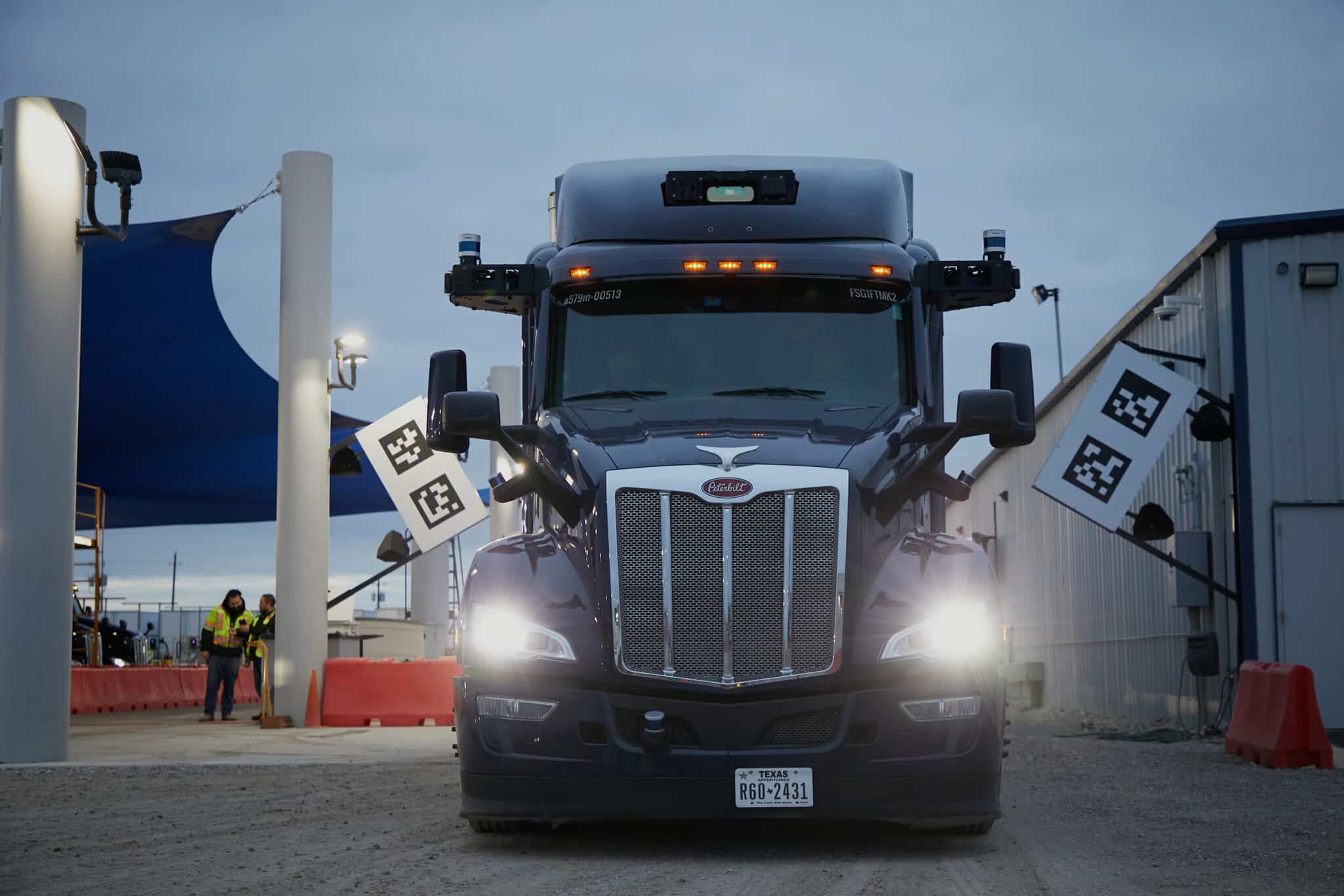
An Aurora Innovation Inc. driverless truck at the company's terminal in Palmer, Texas, US, on Wednesday, Dec. 28, 2023. Driverless trucks with no humans on board will soon cruise Texas, highways if three startup firms have their way, despite objections from critics who say financial pressures, not safety, is behind the timetable.
A Peterbilt truck operates using Aurora Innovation’s autonomous technology. (Photo/Bloomberg)

While advanced data collection is expected to bolster the insurance landscape — and potentially lower premiums if the data validates safety — the tech-heavy nature of autonomous trucks poses cyber liability concerns, Eryn Brasovan, an insurance lawyer at Womble Bond Dickinson, previously told Equipment Finance News. 

“When the entire operation of the vehicles is computers, what happens in terms of cyber liability if those are able to be hacked in any event? So you’ll likely see a shift in coverage there, too,” she said. 

Register here for the free Equipment Finance News webinar “Tech-driven risk management: How innovation is reshaping equipment finance” set for Tuesday, Dec. 9, at 11 a.m. ET.  
Tags: autonomous equipmentcommercial insuranceequipment financetrucking
Previous Post

Q&A with … EverBank’s vendor equipment finance team

Next Post

Prime Equipment Finance, Acquis partner on asset protection

Related Posts

The Revoy plug-in device in Indio, California.
Transportation

How to Make Any Diesel Freight Truck Electric? Use This Plug-In Device

July 30, 2026
PACCAR Achieves Very Good Annual Revenues and Net Income
Transportation

Paccar Financial revenue ticks up amid trucking recovery

July 28, 2026
A Volvo FH electric truck, at the IAA Transportation fair in Hannover, Germany, on Monday, Sept. 16, 2024. The commercial vehicle exhibition runs until Sept. 22.
Transportation

Toyota to acquire one-third stake in fuel cell venture cellcentric

July 27, 2026
Next Post
DLL enters financing partnership with Waev

Prime Equipment Finance, Acquis partner on asset protection

Proud Member Of

Check Out Our Industry Event

Stay Informed With Our 8 Newsletters

The Dig Podcast

Dealer Operations

Arrow Trucking Co. tractors are stored on a lot near a Freightliner dealership in Tulsa, Oklahoma, U.S., on Monday, Jan. 4, 2010. Arrow Trucking Co., the 61-year-old Tulsa-based flatbed carrier, suspended operations on Dec. 22, 2009, laying off employees and stranding scores of drivers by cancelling fuel credit cards, Tulsa World reported. Federal Authorities later issued an emergency order to executives to retrieve company trucks and trailers from truck stops and parking areas around the country.

Premier Truck Group F&I revenue rises 12.5% YoY in Q2

July 29, 2026
Aftermarket revenue shines in Rush Enterprises’ Q4 earnings

Rush F&I revenue climbs 14.6% in Q2

July 29, 2026
A worker moves boxed appliances inside the warehouse of University Electric appliance store in Santa Clara, California, US, on Wednesday, July 1, 2026. The US Census Bureau is scheduled to release durable goods orders on July 2.

Core capital goods orders rise 12.5% YoY in June

July 27, 2026
  • About Us
  • Advertise
  • Contact Us
  • Privacy Terms
  • ADA Compliance

 [wt_cli_manage_consent]

Connect with us

© 2026 Royal MediaRoyal Media

Welcome Back!

Login to your account below

Forgotten Password?

Retrieve your password

Please enter your username or email address to reset your password.

Log In
No Result
View All Result
  • News
    • All News
    • Dealers
    • Lenders
    • Transportation
    • Agriculture
    • Construction
    • Material Handling
    • Rentals
    • Compliance
    • Data Analysis
  • Event
  • Data
  • Features
  • Lender Directory
  • Podcast
  • Webinars
    • (Upcoming Webinar – Dec 9) Tech-driven risk management: How innovation is reshaping equipment finance
    • Webinar Library

© 2026 Royal MediaRoyal Media