China has an 18-wheel answer to soaring global diesel prices
China targets new-energy vehicles accounting for 40% of heavy-duty truck sales by 2030

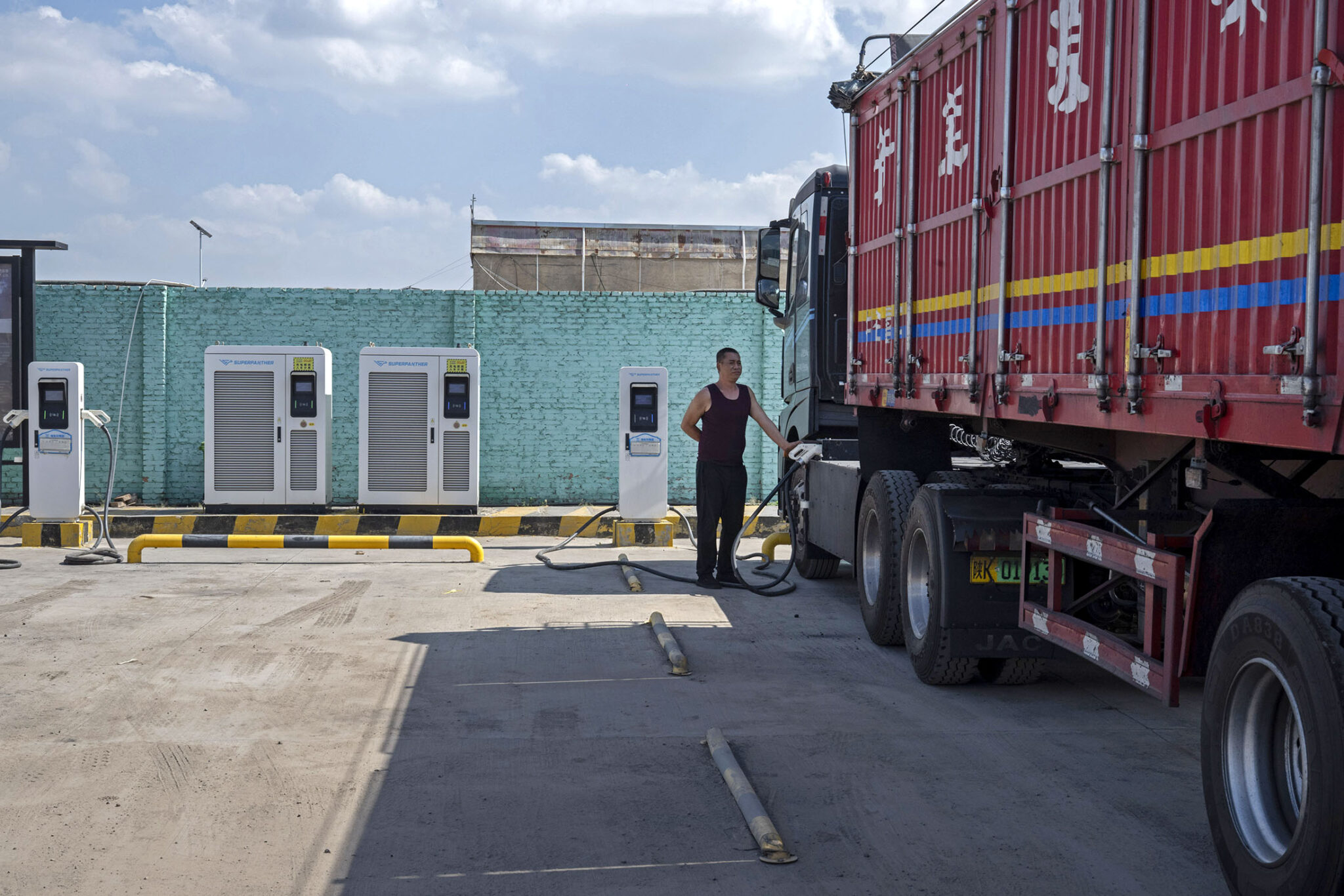
As Qu Shaolong pulls his electric truck into one of the many charging stations that dot the Chinese coal hub of Yulin, the latest phase in the country’s energy transition is playing out in real time.
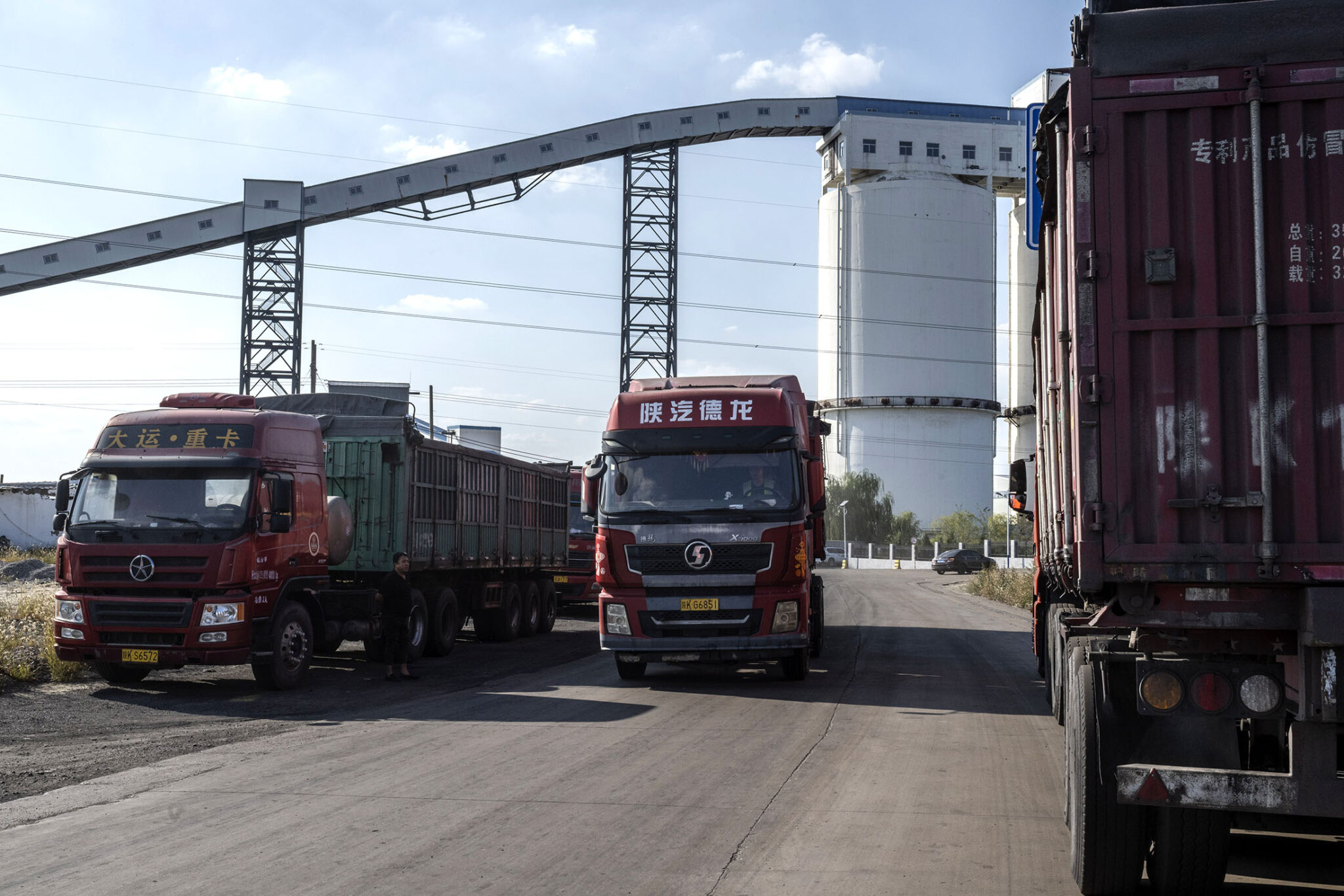
The roads in this part of Shaanxi province are filled with big rigs ferrying coal from mines to railheads. More and more of them are, like Qu’s, battery-operated, allowing truck owners to avoid diesel prices that have climbed steadily this year. The shift is changing China’s energy landscape.
“I don’t think anyone will switch back to diesel trucks,” said the 39-year-old, who has spent the last three years behind the wheel of an electrified hauler. “Nobody wants to return to a last-generation technology.”
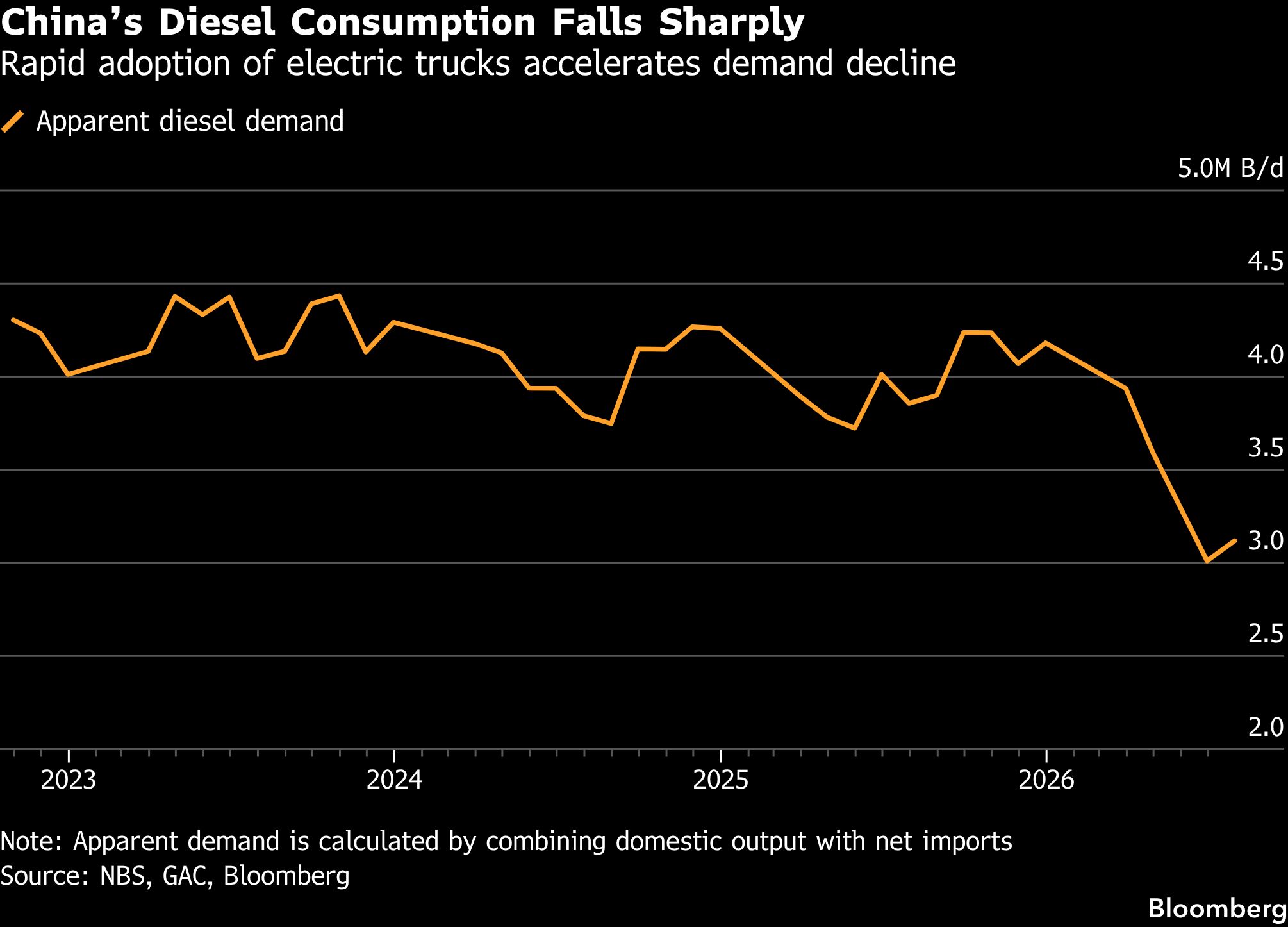
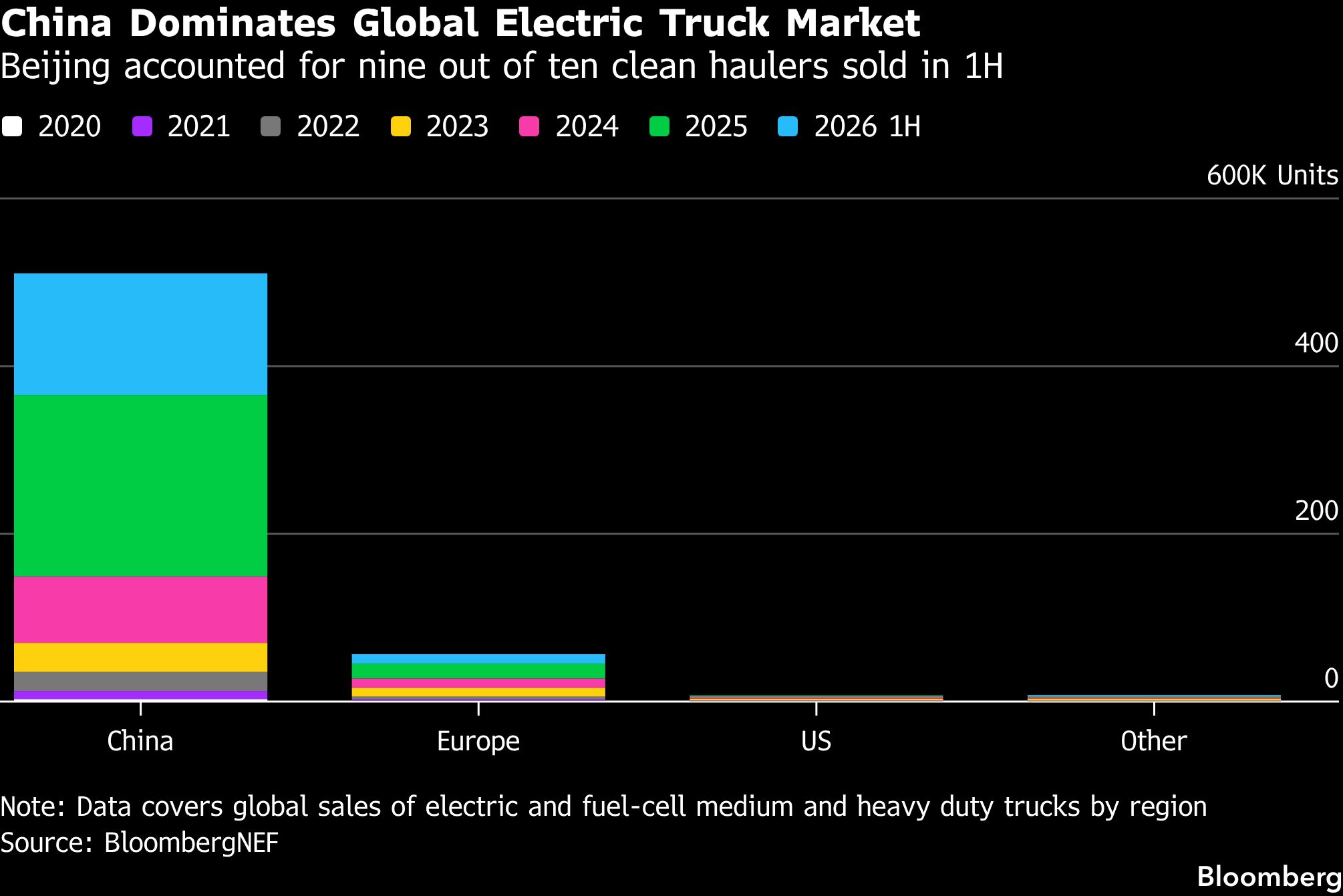
Qu is one of thousands of drivers powering a profound shift in the world’s biggest oil import market. Chinese e-truck sales jumped almost 80% in the first half from a year earlier, according to BloombergNEF, getting a boost as the US-Iran war and Ukrainian attacks on Russian refineries sent diesel prices soaring. They are on pace to account for close to a third of all rigs sold this year, up from just 8% a couple of years ago.
Diesel consumption in China will drop more than 10% this year, Sinopec Economics & Development Research Institute estimates, a shift that has helped Beijing navigate this year’s oil shock and limited price rises for global markets in turn — all while cutting emissions, even if coal still plays a major role in electricity generation.
The electrification of road freight is emerging as a structural force that could undermine long-term oil demand across the world.
“The EV revolution that began with China’s passenger car fleet has now quickly spread into the field of heavy-duty trucking,” said Anders Hove, a senior research fellow at the Oxford Institute for Energy Studies. “As EV adoption accelerates, EVs become a larger and larger cushion” against supply shocks such as the Iran war, he said.
The electrification of trucking is actually happening much faster than for passenger vehicles, as rigs are used more intensively and have a quicker turnover, Hove said.
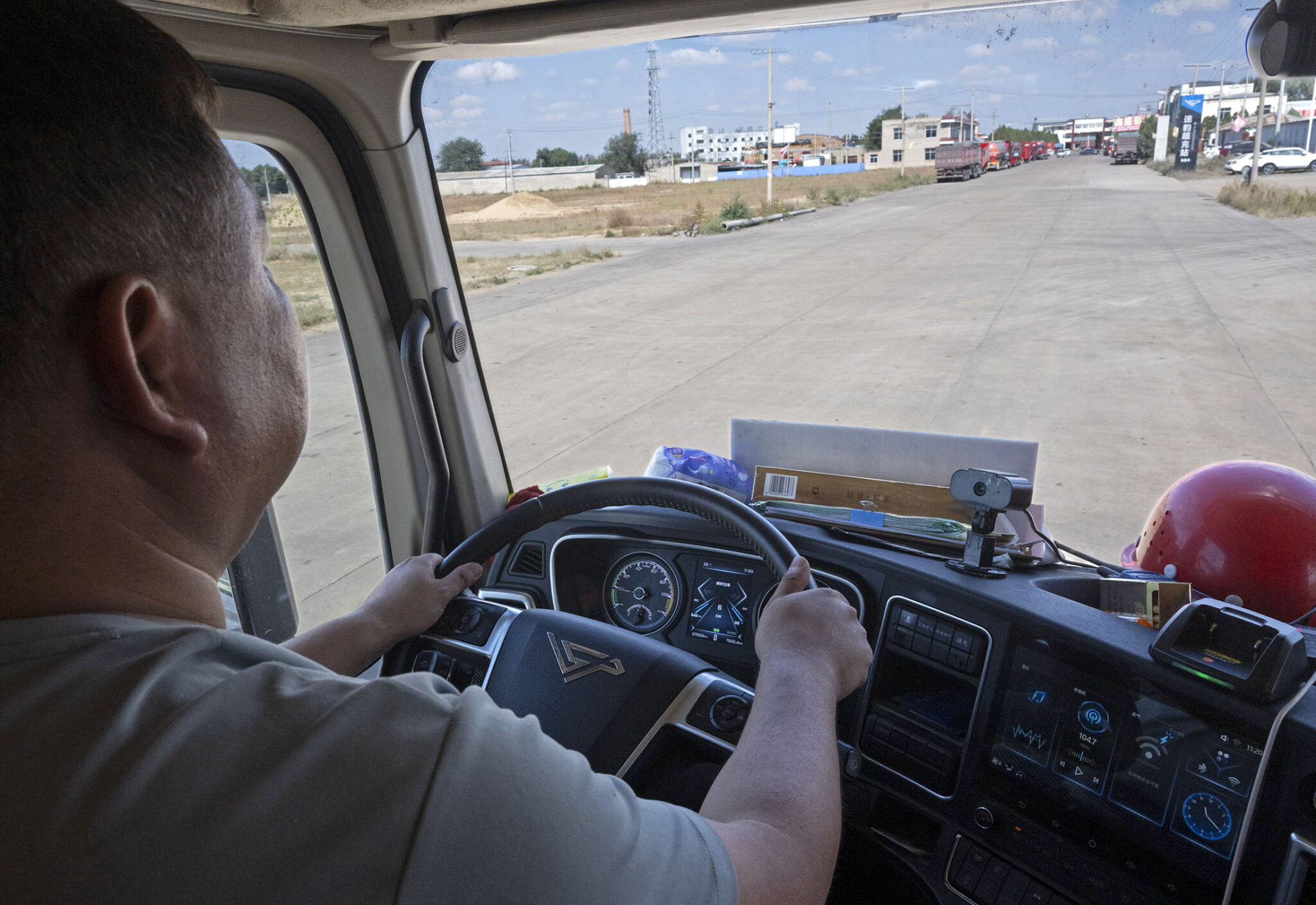
E-trucks look similar to diesel-powered rigs, apart from a large rectangular slab between the cabin and the trailer that houses the battery cells. When they start though, the roar of a combustion engine is replaced with the high-pitched whine of an electric motor and puffs from the hydraulic system.
The other major difference is economic. Li Bao, another driver in Yulin, said it costs about 200 yuan ($30) to recharge his truck, or less than a third of what he used to pay to fill his rig up with diesel. That’s offset by higher upfront costs to buy an e-rig. An electric heavy-duty truck will set you back about 600,000 yuan, compared with about 400,000 yuan for a similar-sized diesel model, according to an estimate by Chinese industry consultant SCI99.
The difference between running an e-truck in China and a traditional rig in the US are even more stark. A 200-kilometer journey for a diesel truck in the US would cost you about $101, compared with just $21 for a similar-sized vehicle in China charged during off-peak hours.
With US nationwide average diesel prices at a record high above $6.50 a gallon, the workhorse fuel has become an inflation headache and a major political issue heading into the midterm elections, prompting President Donald Trump to consider an export ban.
There’s another, more pressing reason motivating Chinese policymakers to encourage the electrification of road freight: Energy security. They can run on the abundant electricity generated from the country’s vast coal and renewable resources.
China’s e-trucking industry has evolved from early pilot projects at mines and ports to become a core pillar of its transport strategy. Since the first light-duty e-truck was tested in Wuhan in 2008, Beijing has steadily expanded policy support, culminating in a series of measures since 2025 that prioritize heavy-duty vehicles, charging infrastructure and clean-energy freight corridors.
Cities such as Beijing, Shanghai and Shenzhen have granted e-trucks preferential road access, while industrial centers like Linfen in Shanxi province have introduced mandatory replacement for diesel rigs. The port city of Tianjin has been one of the most enthusiastic promoters, encouraging the use of e-trucks for container transport, and investing in charging and battery-swapping facilities for heavy haulers.
China’s latest roadmap, released earlier this year, sets targets of new-energy vehicles accounting for a fifth of the country’s heavy-truck fleet and at least 40% of sales by 2030. The growth of the sector, which has also been spurred by falling battery costs, means the e-trucks are no longer just used to haul coal, cement and minerals, but now move consumer goods, electronic components and industrial products.
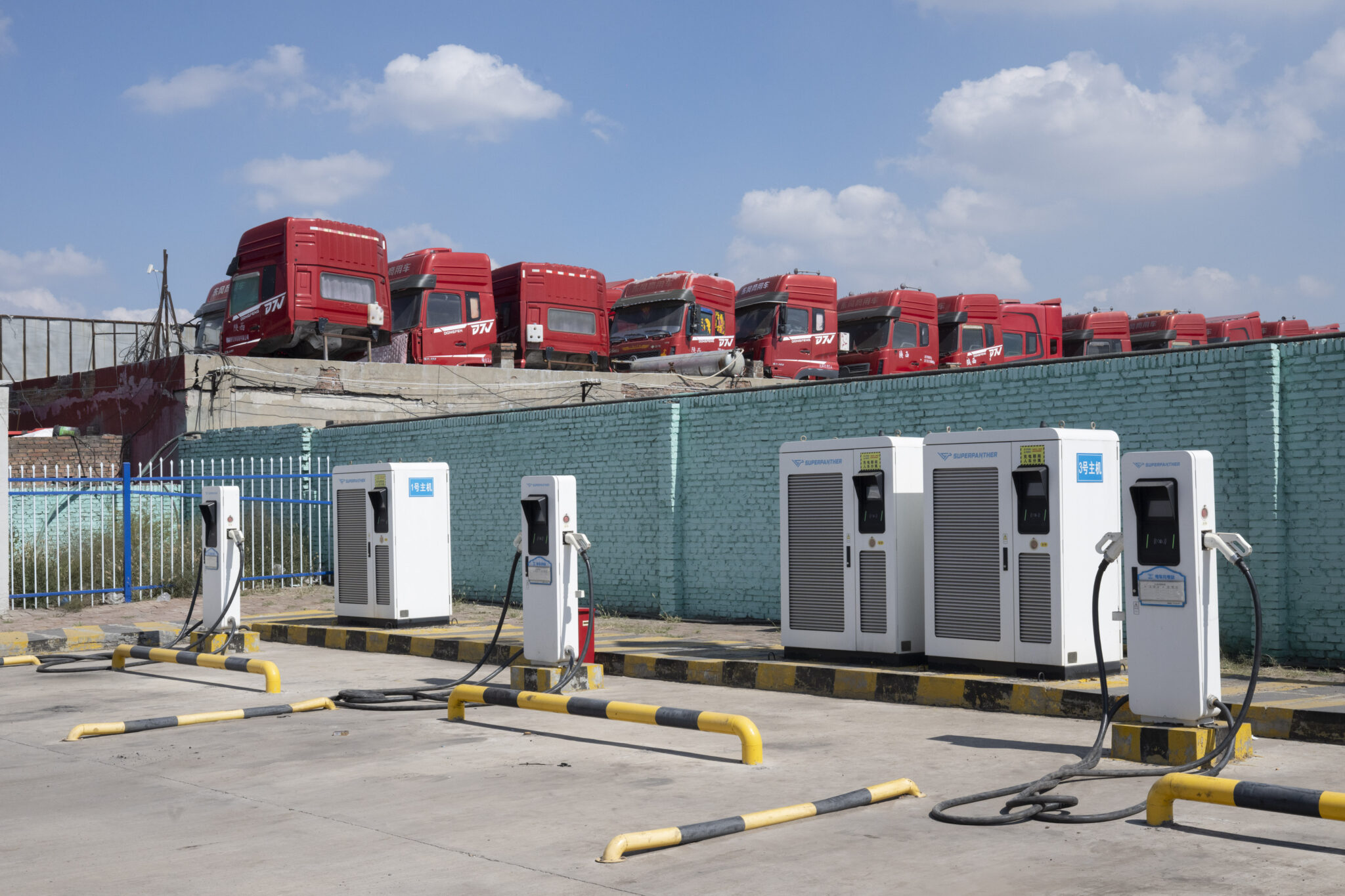
“For China, the conversion from internal combustion engines to electric trucks has been phenomenal,” said Piak Hwee Tan, vice president of international key accounts at manufacturer Fujian SuperPanther Power Technology, which started making e-trucks for the domestic market in 2024.
At the moment, e-trucks are mainly a Chinese phenomenon — more than nine out of 10 sold globally in the first half of 2026 were in the country, according to BNEF. But that’s changing. Chinese exports of electric tractor trucks in the first half of this year were more than double for the whole of 2025, with deliveries to other parts of Asia, Latin America and Africa.
“In Asia, there are a lot of governments that are talking about electrifying their trucks and looking for renewable energy, especially after the crisis in the Middle East,” Tan said. SuperPanther started selling vehicles to Europe in July, and is looking to enter the Southeast Asian market later this year, he said.
Apart from SuperPanther, there are dozens of e-truck makers in China, including BYD Co., XCMG Construction Machinery Co. and Sany Heavy Industry Co. In Europe, Volvo Trucks and Daimler Truck are prominent manufacturers, while Tesla Inc. is also venturing into the sector. Contemporary Amperex Technology Co. Ltd. leads the supply of batteries to the rigs in China, and has ambitions to dominate the market globally.
Nippon Express (China) Co. is one company that has embraced the trend. The Japanese logistics giant has deployed four e-trucks in Shanghai, using them to move goods such as electronic parts to destinations in the Yangtze River Delta in eastern China.
“Our aspiration is to use 100% EV vehicles in our fleet system in the next three to four years as we implement our fleet renewal plan,” said Li Wenjun, president of Nippon Express (China). The company has also deployed e-trucks in Japan, Taiwan and Hong Kong.
For transport firms, going electric involves balancing the higher upfront price and maintenance outlays against lower day-to-day running costs. Liu Shuan, a 34 year-old coal trader in Yulin, whose company bought 15 SuperPanther e-trucks last year, said he expects to make up for the higher purchase costs in two years time.
“While electric trucks generally offer significantly lower energy costs than diesel vehicles, vehicle acquisition costs, insurance expenses and depreciation currently remain higher than those of conventional diesel trucks,” said Kelvin Tang, APAC ground & rail leader at freight company CEVA Logistics, which operates more than 500 e-trucks around the world.
The pace of adoption around the world — and in China — will depend on the extent of government policy support. Beijing has operated an annual scrappage-subsidy program for older diesel trucks since 2024, offering cash incentives to encourage fleet operators to replace aging vehicles with cleaner alternatives. Transport companies are watching to see whether the program will continue next year.
There’s every reason for other Asian energy importers, fresh from this year’s Middle East shock, to follow China’s lead.
“This year, electric heavy-duty trucks have emerged as a highlight,” Fairy Wang, vice president of the Sinopec research institute, said at an event in Beijing this month. “Right now, we think half, or even more of trucks sold this year will be electric.’’


Proud Member Of

Check Out Our Industry Event