Equipment-as-a-Service growth fueled by infrastructure boom, data centers, onshoring
Domestic growth ranged from 3% to 6% annually over the last 5 years

The global equipment-as-a-service market is entering a growth phase driven by infrastructure spending, data center development and the onshoring of manufacturing.
Demand for outsourced equipment solutions expanded steadily over the past decade as businesses seek alternatives to owning and maintaining large equipment fleets, Matthew Hudson, managing director and head of equipment as a service (EaaS) at advisory firm Houlihan Lokey, told Equipment Finance News.
“Rental penetration rates remain relatively lower in certain markets when compared to those in Europe, which remains ahead of adoption in the U.S. and Canada,” he said.
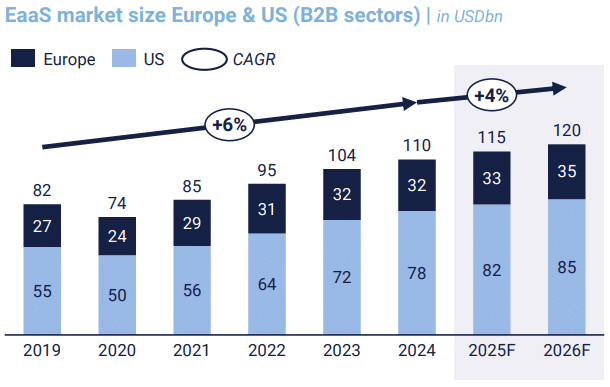
With equipment rental demand remaining supported by public infrastructure spending and renovation initiatives, the EaaS sector continues to grow steadily, expanding 0.9% in 2024, with projected growth of 2.8% in 2025 and 3.6% in 2026, according to investment bank Carlsquare’s 2025 EaaS Market Report released on Dec. 4, 2025.
Houilihan Lokey’s Hudson expects U.S. adoption and rental penetration to expand fastest in sectors benefiting from:
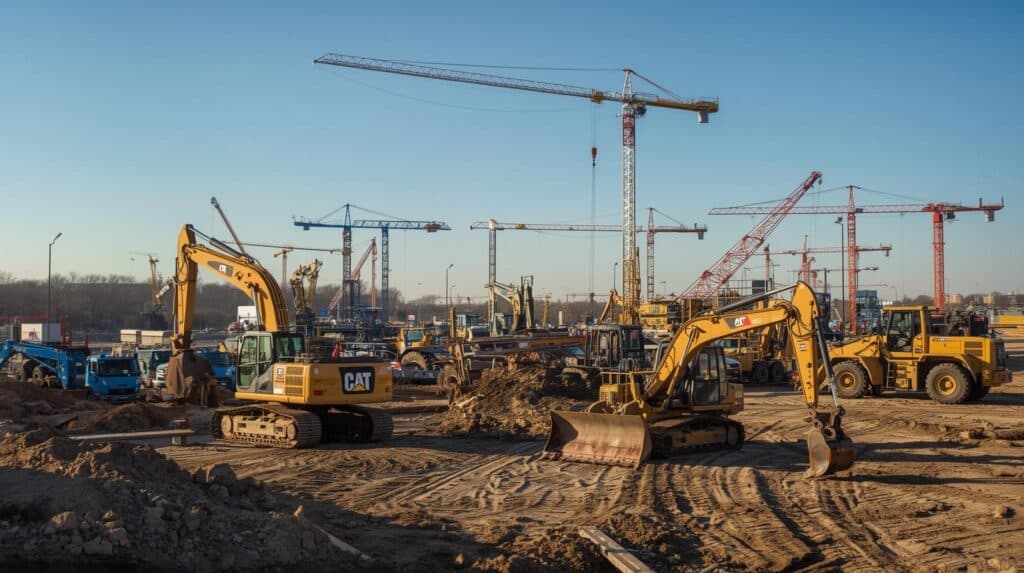
- major infrastructure investment,
- AI-related data center development. and
- the reshoring of semiconductor and chip manufacturing.
Growth on the rise
Domestic growth in the sector has generally ranged between 3% and 6% annually over the past five years, a pace expected to continue as these projects move forward and contractors and historic fleet owners seek to maintain capital efficiency, Hudson said.
“Contractors’ core competency is not owning, servicing and maintaining expensive equipment fleets. Instead, they need access to a wide array of equipment classes at different times,” he said. Difficulties with full fleet utilization and high equipment costs push more companies to rentals, which increases rental demand.
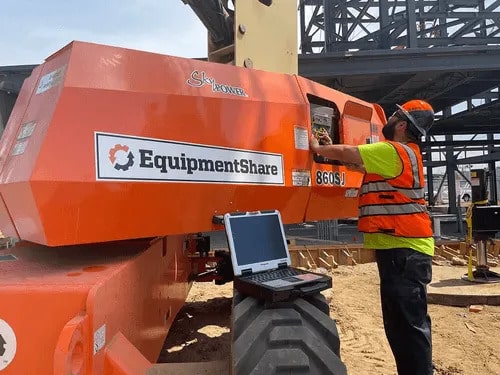
Technology also plays an increasingly significant role in the sector’s evolution. Digital platforms, analytics, and management tools improve utilization and enable predictive maintenance, reducing costs and increasing uptime, Hudson said.
Financial services adapting to EaaS
While demand for EaaS grows rapidly, many companies still seek to define what it means and require flexible financing and operational structures to support the model, Ann Brodette, senior vice president and general manager of industrial at Mitsubishi HC Capital America, told EFN.
“It lets a company pay for what they actually use, and then it can protect their cash. They can reduce the risk of making a big commitment, especially with automation and newer pieces that they’re not quite sure about, so that’s been really big.” — Ann Brodette, senior vice president and general manager of industrial, Mitsubishi HC Capital America
The future of EaaS, Brodette said, is being shaped by:
- The rise in results-based payment models tied to machine performance;
- Blended financing structures that combine multiple funding sources; and
- Use of real-time equipment data to enable smarter pricing and maintenance.
Meanwhile, private equity and credit investors remain active in the EaaS sector, Hudson said. Infrastructure-driven demand, the market’s fragmented structure and opportunities to improve operational efficiency through technology attract investors.
OEMs, rental houses lean on EaaS, rental
The wider equipment industry aims to use rental and service models as part of broader customer-focused strategies.
Caterpillar, for one, is prioritizing services and rental solutions as customers increasingly seek flexible access to equipment, Rodney Shurman, group president of construction industries at Caterpillar, said during the company’s presentation at ConEXPO on March 5.
“Dealers are independent businesses that focus on what inventory they need for their customers, but as we look through that, the opportunity we have … is we’re focused on growing services and rental,” he said. “Having the right equipment out there for them is going to be critical to solving that problem and [allowing them to] continue to grow.”
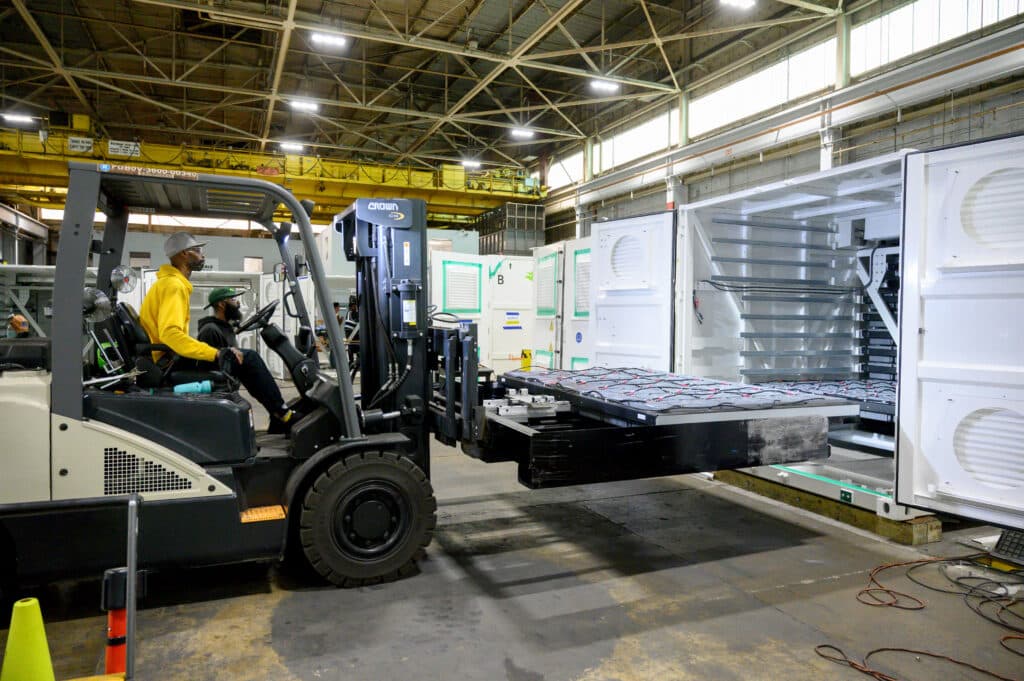
Rental often serves as a first touchpoint for Caterpillar customers, with digital tools simplifying equipment access through dealers, Shurman said. Caterpillar helps rental customers address short-term equipment and cash-flow needs while addressing access, fleet age, composition and turnover.
“It’s just a great way for us to continue to grow our financial portfolio and get some more stability in the business between cycles.” — Rodney Shurman, group president of construction industries, Caterpillar
Fleets of the future
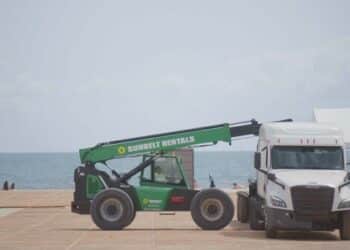
Additionally, fleet modernization also enables EaaS growth, Brad Coverdale, vice president of fleet and product support at Sunbelt Rentals, said in a statement provided to EFN. Continued investment in equipment fleets remains central to meeting customer demand, including expansion into emerging technologies, he said.
Companies serving infrastructure development, data center construction and onshored manufacturing projects should expect the strongest growth, Houlihan Lokey’s Hudson said.
“The strongest performing businesses will deliver strong returns on their equipment and generate high levels of free cash flow conversion,” he said.
The fourth annual Equipment Finance Connect at the C. Baldwin in Houston May 18-19 is the only event that brings together the equipment industry to share insights, attend discussions on crucial industry topics and network with peers. Learn more about the event and register here.

Proud Member Of

Check Out Our Industry Event