AI investments, fleet replacements buoy equipment finance demand
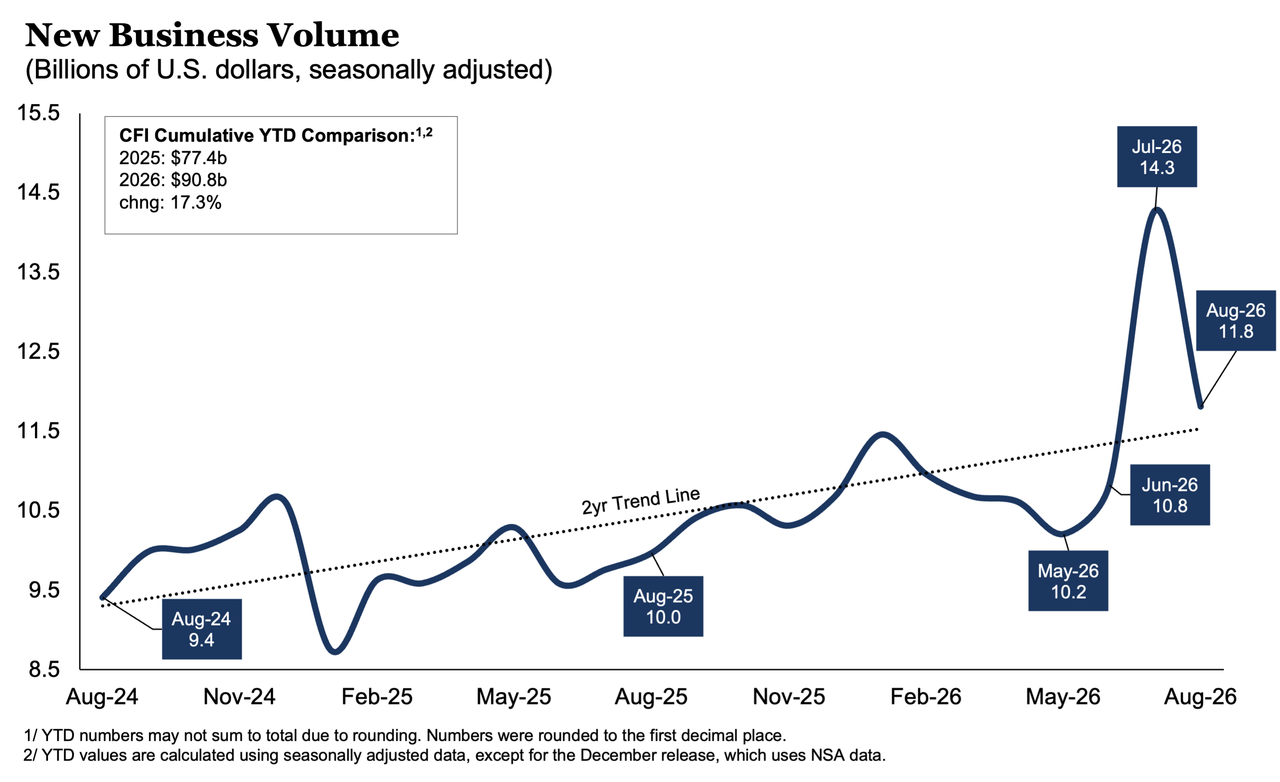
Equipment finance volume up 17.3% YoY through August

AI-related investments, construction activity and fleet replacement cycles are eclipsing macroeconomic challenges as equipment finance volume remains on track for a historic year.
New business volume in the industry increased 17.3% year over year to $90.8 billion through the first eight months of 2026 and is projected to reach $137.7 billion for the full year, up 14.4% from the 2024 record, according to the Equipment Leasing and Finance Association’s (ELFA) CapEx Finance Index, released Sept. 29.
New business volume fell 17.3% month over month in August to $11.8 billion, but that followed a record $14.3 billion in July, nearly 25% higher than the previous high.
Despite geopolitical uncertainty and the Federal Reserve raising its target interest rates by 25 basis points last month, businesses “recognize the need to modernize equipment and invest in technology that drives productivity and resilience,” DLL General Manager for the United States Mike Janse stated in the ELFA report.
Plus, many businesses have “quit waiting” to see what happens with rates and are refreshing their fleets, “so anybody who deferred a purchase last year has stopped holding out,” Crest Capital President Mark French told Equipment Finance News.
“The equipment kept wearing out while they waited, and what triggers the buy now is repair bills and downtime, not the rate.”
— Mark French, president, Crest Capital
The One Big Beautiful Bill Act, which restored 100% bonus depreciation and expanded immediate business deductions, also “keeps pulling purchases forward, so those tax-driven decisions are landing earlier in the year instead of piling up in Q4,” French said.
Further highlighting investment activity, core capital goods orders — which excludes defense and aircraft equipment — jumped 10.6% YoY through the first eight months of 2026 and rose 1.6% MoM in August, according to the U.S. Census Bureau’s durable goods report on Sept. 25.
Booming sectors
Construction, IT and industrial sectors remain significant growth drivers in equipment finance.
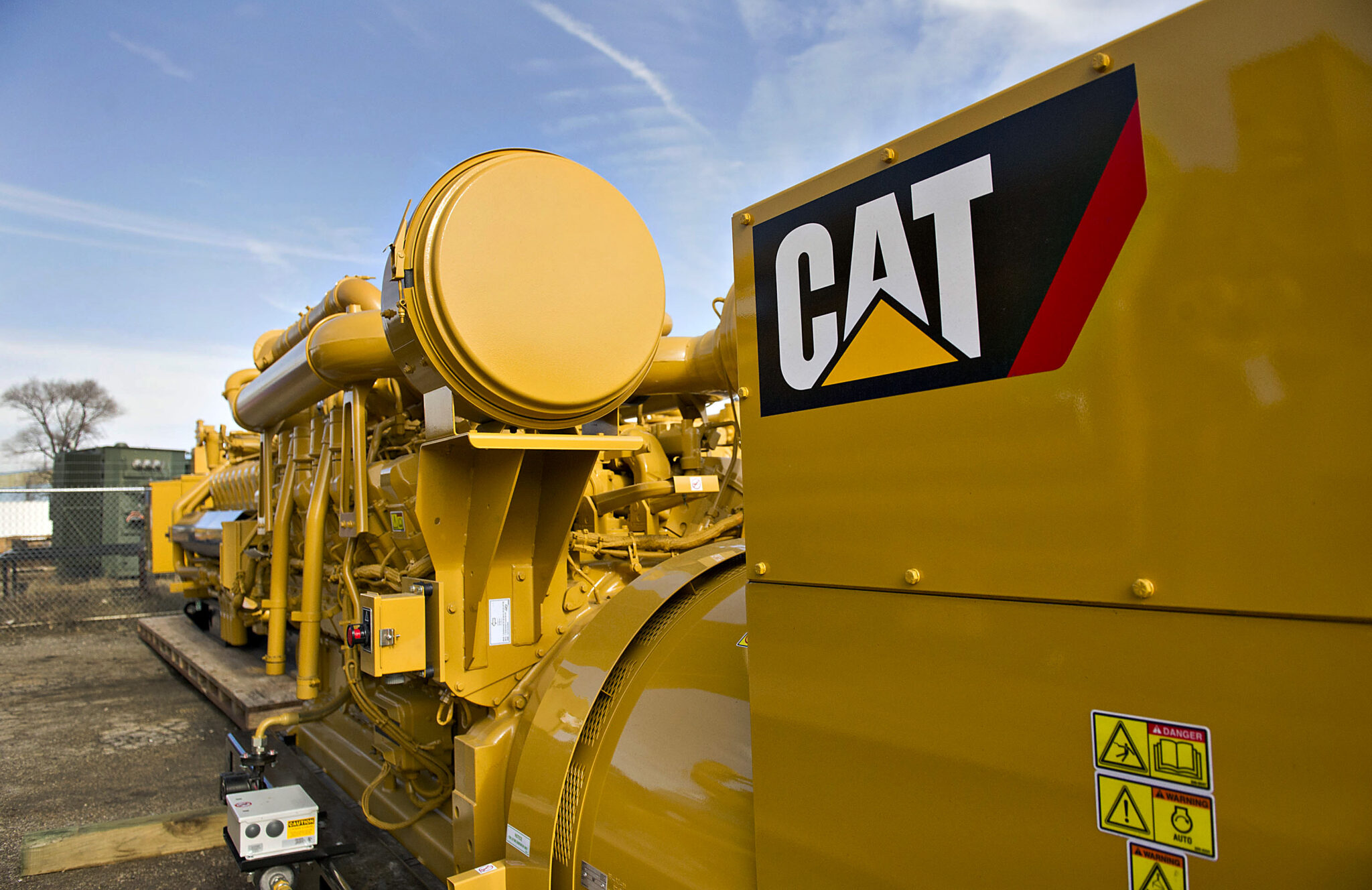
The data center boom has boosted demand across these sectors as well as energy, evidenced by Caterpillar, which saw its power and energy segment sales jump 17% YoY in the second quarter to $8.2 billion, including a 72% surge in power generation products for data centers, according to its Aug. 4 earnings materials.
Sales for Caterpillar’s power and energy segment — its largest and fastest growing — accounted for roughly 40% of its total revenue in Q2.
While data centers, infrastructure developments and AI have been significant, lenders are also capitalizing on smaller construction projects, “especially localized residential and commercial rather than the megaprojects,” French said.
Additionally, demand is strong for machine tools “due to reshoring-driven manufacturing,” he said.
Even the transportation finance sector, which got pummeled by a wave of distress in recent years, is bouncing back as more proven operators upgrade their fleets while overcapacity wanes, CAG Truck Capital President Chris Grivas told EFN.
“Applications are pouring in; margins are strong,” he said.
However, lenders must stay disciplined and cautious of inexperienced operators, Grivas said.
“Maybe they don’t have the down payment, or they’re trying to buy a truck that’s cheap … with 600,000, 700,000 miles to start a business,” he said. “To me, that’s called business suicide.”
Check out our exclusive industry data here.


Proud Member Of

Check Out Our Industry Event