Soybean export angst dampens farmer sentiment
60% of farmers think now is bad time for large investments

Concerns about soybean exports and tight lending darkened farmers’ outlook last month, although improved commodity prices bode well for the farm equipment market’s recovery.
Purdue University’s Ag Economy Barometer, released Jan. 6, dipped three points in December 2025 to 136, following a 10-point increase in November. About 400 farmers were surveyed from Dec. 1 to Dec. 5 for the report.
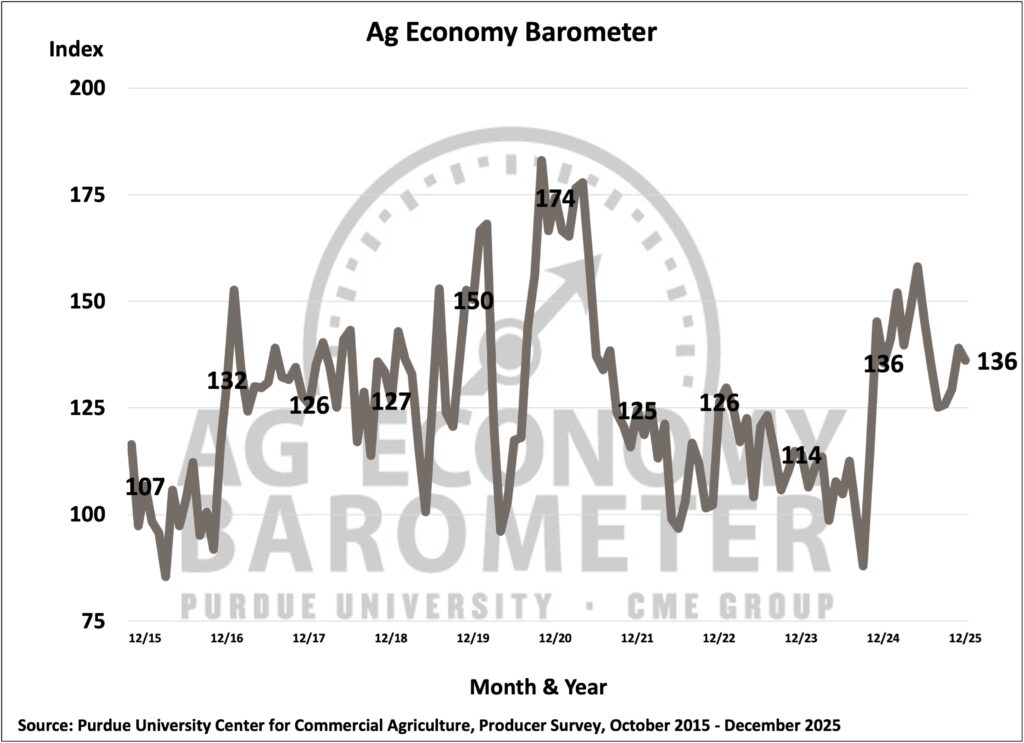
The Future Expectations Index dropped four points to 140, and the Current Conditions Index was unchanged at 128.
The weakened sentiment was largely due to increased soybean-export competition from Brazil, with 84% of respondents saying they’re concerned or very concerned about this trend.
Brazil’s emergence as a major player in the global soybean market poses “a big challenge” to U.S. crop producers, Michael Langemeier, director at the Center for Commercial Agriculture at Purdue, told Equipment Finance News.
“Traditionally, we’ve relied on exporting soybeans to China to support 85 million acres of soybean farms,” he said. “Here’s the big problem: If that export demand does not get back to where it was … what do we do with the acres that we really don’t need to be soybeans anymore?”
OEMs take notice
Agriculture OEMs could focus more on the Brazilian market to help offset muted equipment demand in the United States, Langemeier said.
“They’re going to have several million more acres of crop ground there,” he said. “They’ll need to be buying machinery from somebody, and certainly the American companies will have a market share.”
For example, John Deere in 2025 sold 50% of its financing subsidiary Banco John Deere to Brazilian bank Banco Bradesco S.A., reducing Deere’s “incremental risk as it continues to grow in the Brazilian market,” according to its Nov. 26 earnings release.
Deere forecast South American heavy-equipment sales to be flat year-over-year in its fiscal 2026, which began Nov. 3, 2025, compared with a 15% to 20% decline forecast for the U.S. and Canada.
The company is developing products and technologies “to support increased productivity and precision for our Brazilian customer base,” Deanna Kovar, president of Deere’s worldwide agriculture and turf division, said during its Nov. 26 earnings call.
Financing woes
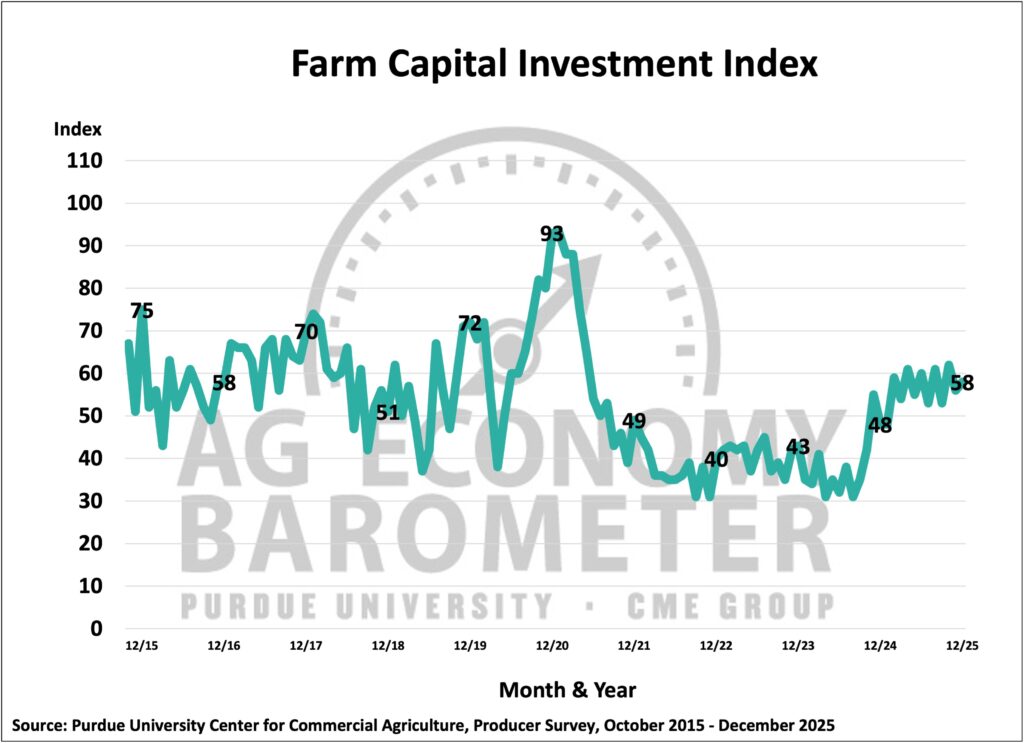
Meanwhile, Purdue’s Farm Capital Investment Index rose two points in December to 58. Still, 60% of respondents believe now is a bad time for large investments, including equipment.
While the federal government’s new $12 billion farm relief package should improve cash flow, many crop producers could struggle to obtain equipment loans or other financing when they are ready to invest, Langemeier said.
“What makes it difficult is they don’t have a solid balance sheet,” he said. “They don’t have a lot of land that’s all free and clear.”
Struggles to pay off equipment purchased in 2021 and 2022 are also hindering lenders’ confidence, he said.
Ultimately, any agriculture industry recovery in 2026 will largely depend on commodity prices, which have improved since the U.S.-China trade deal in October, and whether federal funding helps stabilize cash rents and land values, Langemeier said.
Check out our exclusive industry data here.

Proud Member Of

Check Out Our Industry Event