Lack of federal regulations looms over autonomous trucking
Autonomous truck market could grow 16% annually

It’s the Wild West in the autonomous trucking industry, where no overarching rules and regulations exist despite the rapid emergence of autonomous solutions.
The autonomous commercial truck market is projected to grow 16.2% annually to $6.9 billion by 2028 from $3.3 billion in 2023, according to BCC Research, a market research and analytics firm. The global truck market is expected to see an influx of roughly half a million autonomous drivers by 2044, according to technology research firm IDTechEx.
Industry titans such as FedEx, Volvo Group and Uber Technologies have invested in autonomous solutions as they look to address challenges related to safety, driver shortages and improving efficiency. However, the lack of federal regulation raises questions about the future of autonomy.
“There’s no overarching federal standard because this is a big deal,” Lydia Vieth, a research analyst focusing on autonomy and electrification at ACT Research, told Equipment Finance News. “The FMCSA [Federal Motor Carrier Safety Administration] has been looking into it for at least five years at this point.”
Proposed legislation has been repeatedly shelved, Vieth said, and that’s expected to continue in this presidential election year.
State-to-state variance
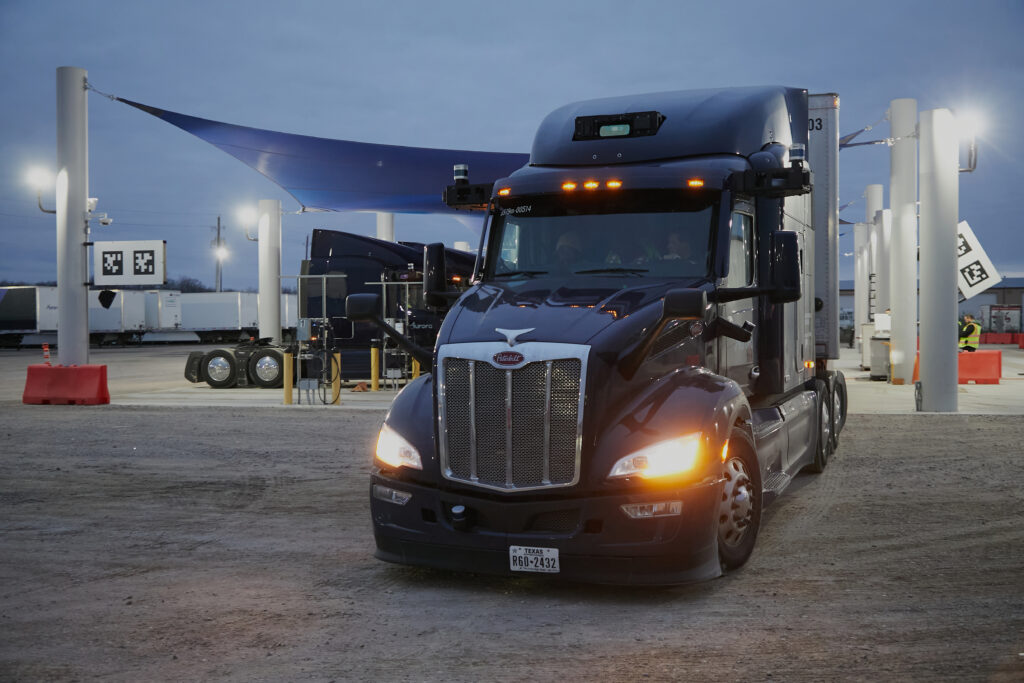
With no federal rules, it’s up to states to govern the autonomous trucking industry as they see fit. In California, for instance, officials are proposing legislation that would require people to stay behind the wheel of self-driving trucks, Vieth said. California also prohibits testing and deployment of loaded autonomous vehicles that weigh 10,001 pounds or more.
Conversely, Texas allows autonomous trucks to operate without a person on board as long as they adhere to state and federal safety standards, including requirements under the National Highway Traffic Safety Administration.
“The rules vary from state to state, even where autonomous trucks are permitted,” Vieth said. “This is why people in the industry are really pushing to get some sort of federal standards on the books and make everyone’s life a little easier.”
Autonomous trucking is legal in 24 states to some degree.
It’s possible that the state-to-state variance in autonomy laws will have a marginal impact on the industry given the differences already in place for traditional trucking, Chris Grivas, president of Chadds Ford, Pa.-based CAG Truck Capital, told EFN.
“I don’t think it’s going to be any different than it is with [traditional] trucking,” he said. “California has its own laws now and they change pretty frequently. You can’t have a truck there that has an engine more than 15 years old if you’re actually hauling a load. … DOT [Department of Transportation] laws also vary state to state.”
The FMCSA has proposed rules for autonomous trucking that could be included in the 2025 federal budget, an administration spokesperson told EFN. It would be the first federal law governing the operation of autonomous trucks carrying no driver.
“It’s important to note that this proposed rule does not advocate for the technology or its use,” the spokesperson said. “Rather, the regulation will help ensure national uniformity and a consistent regulatory approach to ADS [automated driver system]-equipped CMVs.”
Gradual rollout
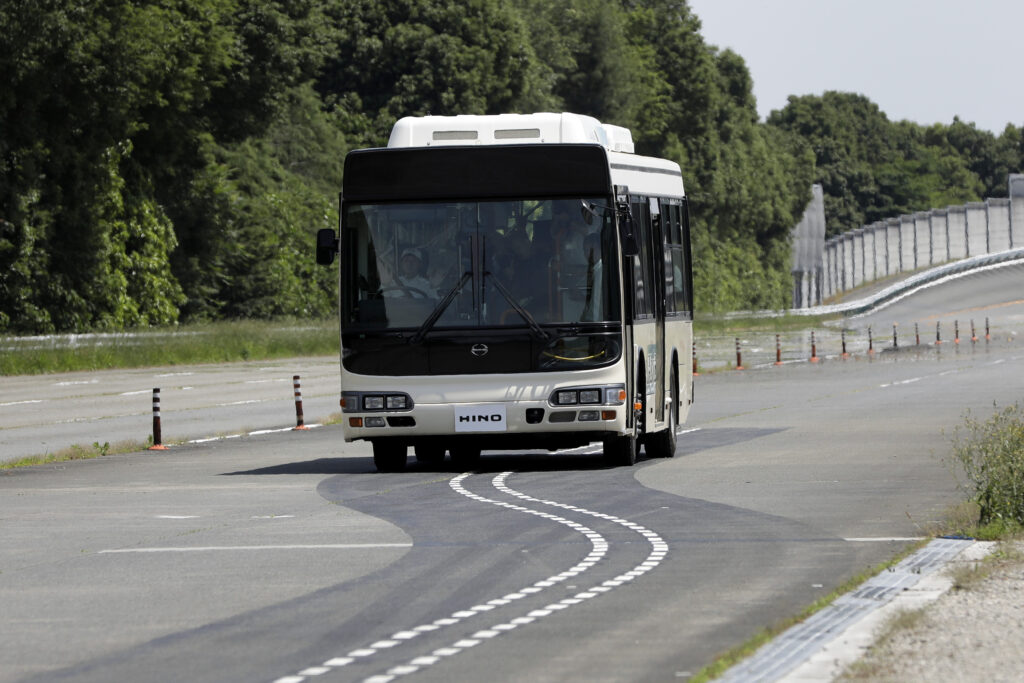
While widespread use of autonomous trucks seems inevitable, they will likely be introduced slowly as they are tested on simple routes, Matt Manero, president of Carrollton, Texas-based Commercial Fleet Financing, told EFN.
“My opinion is that we will see autonomous trucks used in very direct lanes such as Dallas to Houston, where the pick-up and drop-off are easy,” Manero said. “The trucks will still have a driver inside of the cab for the foreseeable future versus empty.”
ACT’s Vieth agreed, saying federal regulation wouldn’t necessarily expedite autonomy adoption due to the extensive testing required.
“If we had a federal rule on this, effective tomorrow, we would not all of a sudden see autonomous trucks everywhere, all at once,” she said. “This is a very measured rollout. … We’re starting out very small in the grand scheme of things.”
Autonomous trucking technology is at the Level 4 stage, Vieth said, meaning vehicles can operate without human intervention in only some instances. Having the capability to handle any situation on the road without human intervention is what’s needed to advance to the fifth and final stage of autonomous technology.
Potential lawsuits also could hinder autonomous trucking, Dan Murray, senior vice president of the American Transportation Research Institute, told EFN.
“We’re terrified as an industry about litigation,” Murray said. “Given that there’s very little true safety actuarial data with these systems, it’s very hard for the insurance industry and the motor carriers to assess these systems.”
What are benefits?
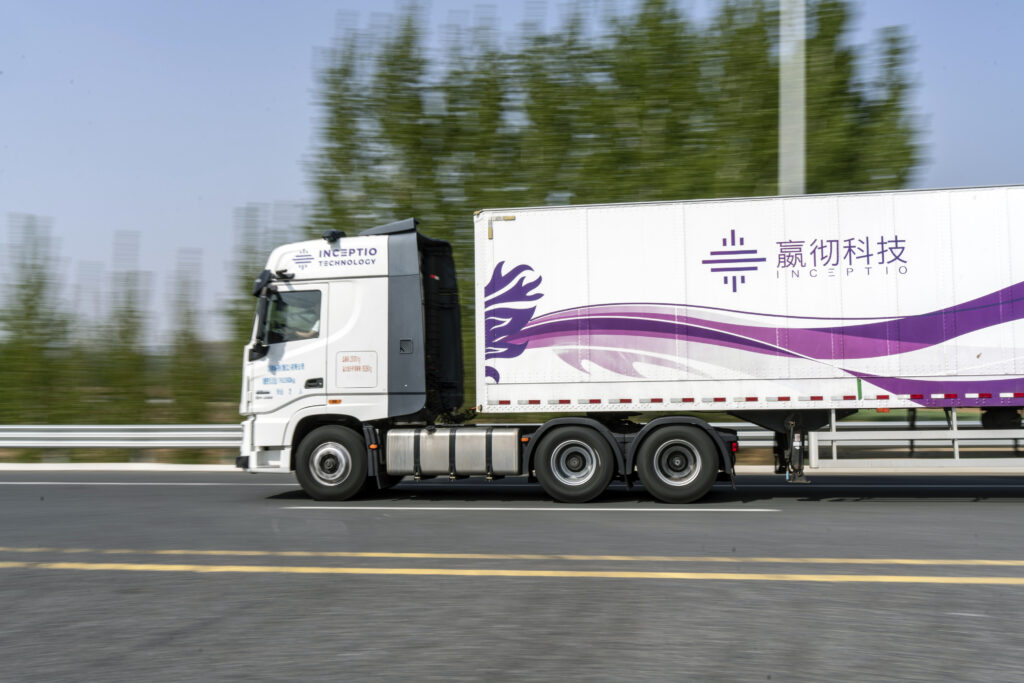
The trucking industry is projected to have a shortage of more than 160,000 drivers by 2030, according to Statista. Fully autonomous trucks are poised to alleviate this challenge as testing and regulation advances.
In the meantime, autonomy can provide a number of benefits even with the required presence of a person in the cab, CAG Truck Capital’s Grivas said.
“The first benefit that comes to mind is a lot less stress for the driver,” he said. “You’re not going to have as much abuse on the vehicle, and you’ll probably see greater efficiency because of the technology.”
Increased truck longevity and reduced maintenance costs because of better efficiency is especially relevant given the high operating costs plaguing the industry, Grivas said. The total marginal cost of operating a commercial truck rose to a record of $2.27 per mile in 2023, up 0.8% from 2022, according to the American Transportation Research Institute.
Obtaining financing for autonomous vehicles isn’t expected to be difficult, Grivas said, although rapid depreciation due to advancing technology could pose challenges when determining loan terms.




Proud Member Of

Check Out Our Industry Event