Equipment finance compliance plagued by variations in state law
60% of lenders struggle to keep pace with regulation changes

Inconsistencies in state laws are throwing a wrench in equipment finance compliance, from commercial disclosure laws to creditors’ rights interpretations in bankruptcy cases.
Sixty percent of more than 2,000 financial services firms are struggling to keep pace with regulatory changes, according to a Sept. 3 report by lending software provider Carleton, citing state-law discrepancies as a challenge.
State-to-state variations are affecting equipment lenders’ ability to navigate regulations, including:
- Commercial financing disclosure laws;
- Creditors’ rights;
- Environmental, Social and Governance (ESG) policies;
- Uniform Commercial Code (UCC) laws; and
- Usury caps.
For these reasons, state variance is a major compliance challenge for the equipment finance industry, Sara Costanzo, a shareholder and creditor rights attorney at Weltman, Weinberg & Reis in Cleveland, told Equipment Finance News.
“Those are all very state-law-specific hurdles that lenders have to go through,” she said. “And in the equipment finance space … some aren’t necessarily prepared to learn and understand all of those laws.”
Equipment lenders are ramping up investment in compliance operations to address these challenges. In fact, 94% of fintech-partnered banks believe it is crucial to invest in new compliance technology and training, according to the financial services platform Alloy. Nearly 70% of 1,200 financial institutions surveyed said that it’s “very important” to have on-demand access to trusted compliance advisers, according to professional services firm Forvis Mazars.
Commercial disclosure complexities
Commercial financing disclosure laws require lenders to provide specific details of loan terms before a transaction is finalized. They were already a pain point for lenders heading into 2025. Now, the growing patchwork of state-specific rules has exacerbated their complexity, Kristin Esche, senior vice president and deputy general counsel at Mitsubishi HC Capital America, a North American equipment financier, told EFN.
“There’s been an expanding wave of states thinking about commercial financing disclosures. Some of these mandate consumer-like disclosures around repayment, APR schedules, etc., and there are some pretty significant penalties and reputational-damage potential there.”
— Kristin Esche, Mitsubishi HC Capital America

Of the states that have passed commercial disclosure laws, the degree to which they enforce them varies greatly.
New York, for instance, requires disclosure from non-bank entities for deals up to $2.5 million, with transaction types including sales-based financing, lease financing and factoring deals, according to digital lending platform Onyx IQ. Exempted transactions include true leases and commercial financing deals exceeding $2.5 million.
In Utah, however, regulations apply to any lender that finances more than five commercial transactions up to $1 million each in a calendar year, according to Onyx. Construction and agriculture equipment lenders are among the exempt parties.
The CFPB’s ‘bleed into commercial’
Despite increased clarity of Section 1071 of the Dodd-Frank Act — a proposed rule that seemed poised to hinder equipment lender operations — the reduced enforcement by the Consumer Financial Protection Bureau allows for widely varied state interpretations.
The pullback is creating a void financiers are scrambling to fill, Joshua A. Hasko, president of law firm Messerli Kramer, said at the National Equipment Finance Association (NEFA) conference in October.
“You had one general set of rules and regulations that you had to follow. Now you’re talking about trying to figure out 50 different states, 50 different regulations.”
— Joshua Hasko, president, Messerli Kramer
And while the CFPB is primarily geared toward consumer protection, “there seems to be a desire for it to bleed into the commercial area,” Andrew Vorhees, a shareholder at Weltman, Wenberg & Reis and an equipment-finance law specialist, said at the NEFA conference.
“One thing that comes to mind in California is the Rosenthal Act,” he said, referring to the 1977 legislation designed to protect consumers from unfair, deceptive and abusive debt-collection practices.
The key turning point for the rule came Feb. 15, 2024, when Democrat Dave Min, then a state senator and now a congressman, proposed Senate Bill 1286. The amendment applies the Rosenthal protections to personal guarantors for commercial deals up to $500,000, and was signed into law Sept. 24, 2024.
Creditors’ rights
Rising bankruptcies in the equipment industries, such as in trucking and agriculture sectors, are spotlighting creditors’ rights.
Read more on bankruptcies here.
While bankruptcies are always filed in federal court, lenders should try to ensure that they are “collecting or litigating in [their] backyard, or maybe allowed to file suit in [their] backyard to make it difficult for the debtor,” Weltman’s Costanzo said.
“One of the things that we’re starting to see in the bankruptcy space is not necessarily any contractual provision on choice of forum, but maybe some forum shopping on behalf of the debtor that’s filing so they don’t have to file in the jurisdiction where they live,” she said.
In essence, judges in some states tend to favor creditors, while those in other states tend to side with debtors, she said.
Varying court interpretations are especially relevant to equipment lenders because “usually the same lawyers are involved in bankruptcy cases,” Andrew K. Alper, vice president and shareholder of Los Angeles-based law firm Frandzel, said at NEFA.
“If you get on the wrong side of a lawyer in a case, they’re going to remember it and it’s going to come back at you, and they’re not going to be as nice.”
— Andrew Alper, VP and shareholder, Frandzel
‘Right to cure’
Repossession laws also vary by state, Costanzo said. While every state has adopted UCC Article 9, which allows lenders to create a security interest in collateral to secure debt, “some of them have different rules on perfecting your security interest,” she said.
“So, if you’re lending in more than one state, you’re navigating that to make sure that at the end of the day, if you want to take the collateral back, did you do it correctly,” she said.
For example, some states enforce “right to cure” policies, which give borrowers an opportunity to rectify their default by paying past-due amounts or other fees before a lender can repossess. This differs from “right to redeem” laws, requiring borrowers to pay the entire remaining loan balance after repossession to reinstall the contract.
“If you don’t comply with the right to cure, you could be barred from repossessing the collateral, or you could be barred from collecting your deficiencies,” Costanzo said.
It’s also important for equipment lenders to avoid “breaching the peace” if a debtor does not voluntarily surrender the asset, Costanzo said. Breaching the peace, or wrongfully repossessing, could also result in being barred from collecting, she said.
“If they’re not going to cooperate, you need to file a suit,” she said. “Some states allow you to file one lawsuit for possession of the property and a money judgment. Some states require completely separate actions — one suit for repossession of the collateral, and one suit separately for deficiency after the fact.”
Commercial EVs
Commercial EVs, an equipment finance sector already grappling with residual-value uncertainty and high upfront costs, now face even more uncertainty after President Donald Trump nullified Environmental Protection Agency waivers granted to the California Air Resources Board. Trump also eliminated the federal Commercial Clean Vehicle Credit as part of the One Big Beautiful Bill Act.
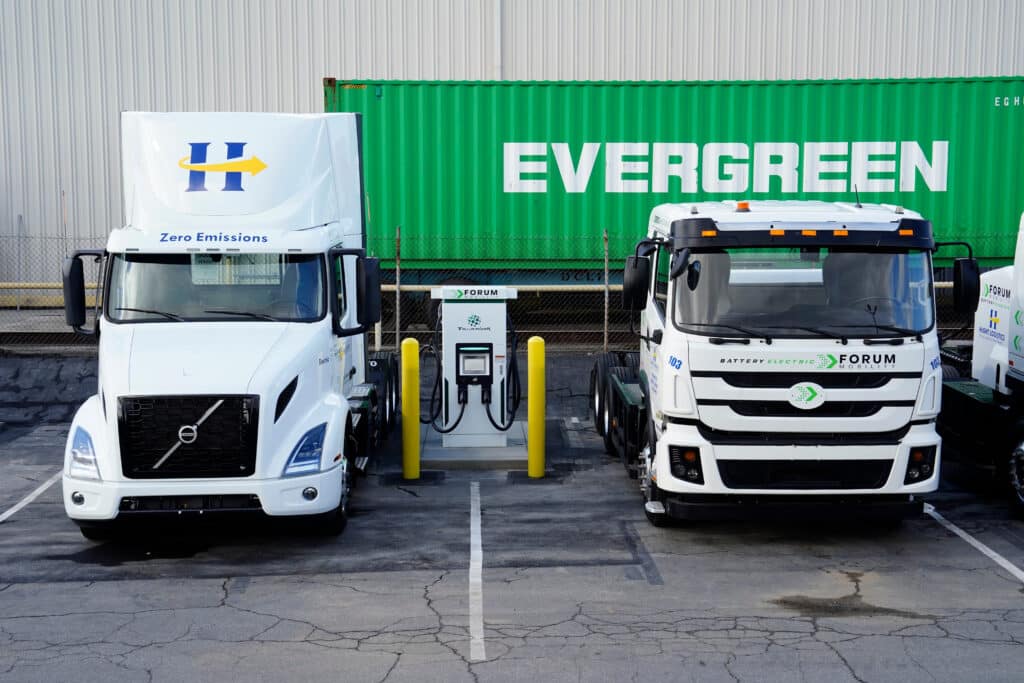
Not only do commercial EV sales now hinge on state incentives, but growing discrepancies in ESG laws also increase the cost of doing business,” Mitsubishi HC Capital’s Esche said.
“It is incredibly time consuming to continue that monitoring,” she said.
However, “it’s an opportunity for finance companies who do the work and pay attention and understand the incentives,” Esche said. “Those incentives are very valuable for them, to be able to guide the OEMs or the vendors or the dealers or the customers that they’re working with.”
States that offer some form of incentives for EV trucks include:
- California;
- Colorado;
- Illinois;
- Maryland;
- Massachusetts;
- New Jersey;
- New York;
- Oregon;
- Pennsylvania;
- Texas; and
- Washington.
Tech solutions
Seventy-two percent of banks and credit unions prioritize compliance when evaluating potential fintech partnerships, according to Ncontracts, which provides compliance and risk management software.
Equipment lenders can use AI tools such as large language models to bolster compliance operations, Mitsubishi HC’s Esche said.
“Machine-learning models can help us flag anomalies in equipment description, serial numbers or valuation, which can help with preventing double pledging of assets and repeated use of similar collateral across repeated loans,” she said.
However, lenders using large-language models to track legislative changes must make sure that they’re highly monitored, Esche said.
Equipment lenders should carefully review the contracts when investing in AI tools “because when you negotiate those agreements, you can ensure that your company data is protected, and then you have more ability to use it and ask it questions like, ‘Did I miss anything in the news this week related to equipment finance legislation?’” she said.
“It’s a powerful tool, but you have to have a human in the loop,” she said.
Register here for the free Equipment Finance News webinar “Tech-driven risk management: How innovation is reshaping equipment finance” set for Tuesday, Dec. 9, at 11 a.m. ET.



Proud Member Of

Check Out Our Industry Event